


DO MORE THAN CONSUME; LEARN AND MAKE TOGETHER
Learn how to investigate a real question, work as a team, and make something useful with technology.Learn how to investigate a question and make together.
You may be new to code, games, video, design, research, data or model-based tools. BAI Youth explains a path through choosing the right tool, safe teamwork, guidance from masters, and turning an idea into a working product. Its age pathways and safeguarding conditions are in preparation; no cycle has been announced yet.
Curiosity · Teamwork · Making · MİLLET · HAYR
- 01A real question
- 02Multilingual team
- 03Master guidance

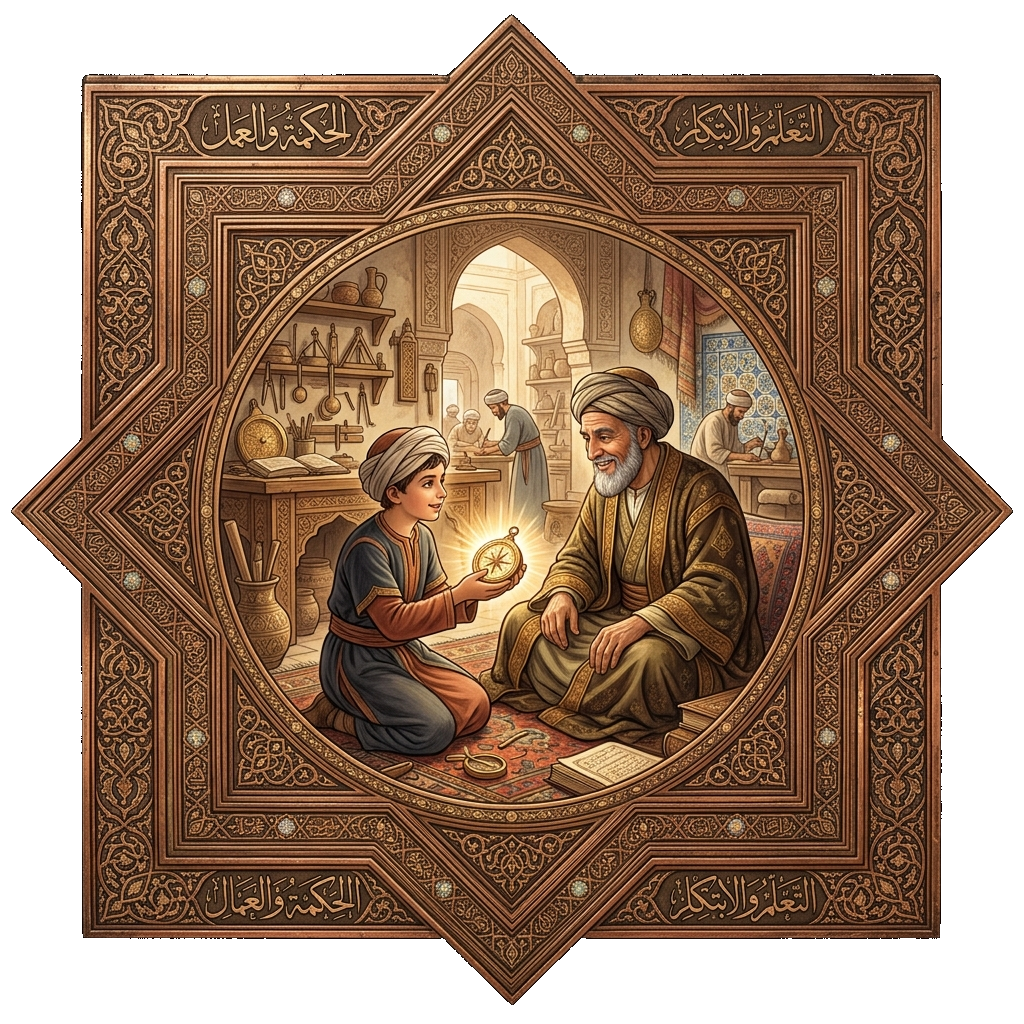
More than a course: a continuing path of making
Your ideas are heard, and your curiosity can grow into real responsibility.
BAI Youth is not a place to watch courses passively. It helps you understand a question, take a role in a team, work with masters, run small experiments and care for what happens after something is made.
Making is not only about being seen. It means carrying responsibility for how your work affects people and how it continues.
From ready-made answers to responsible work
Using a tool well is not enough; you also need to know which question it serves, whom it affects and why it should exist.
Before starting a model, piece of code or publication, you examine who framed the question, where the sources came from and whether the people affected have a voice. When the work is published, you show what it can and cannot do, where human judgement remains, and how errors can be corrected.
A responsible representation makes its sources, limits, human decision and path of correction visible.
Turn your interest into production
Not everyone has to do the same thing; different skills can meet in one team.
You do not need to be experienced already. Start with a path close to your interests and develop new skills within the team.
Games and interaction
Design games and simulations that teach, prompt reflection or let people experience a question.
Video, audio and story
Carry an idea across ages and languages through strong, well-sourced and thoughtfully made content.
Code and digital tool
Develop applications that respond to a real need in a school, family, foundation or professional circle.
Research and information
Examine sources, ask questions, explain ideas and help the team build a reliable knowledge base.
Data, model and agent
Learn the limits of data and create helpful tools that support human decisions and make errors visible.
Design, safety and review
Help make the product understandable, accessible, safe and responsible towards different people.
Grow into MİLLET with young people from different parts of the world
Think in your own language, meet young people who speak other languages and make something together.
You learn and make in your own language within a local circle. In multilingual MİLLET circles, you join shared Missions with young people from other places. Translation tools can ease the first meeting, but they do not replace learning another language or building a real human relationship.
Mother-tongue circle
Develop complex thoughts in your own language and bring the questions and sources of your own society into the team.
Multilingual team
Share roles with young people from other places and learn how the same product is understood across languages and cultures.
Shared Mission
Go beyond meeting one another: work together on child safety, education, family life, history, food or another real question.
Neighbourliness across languages
Begin with translation support and gradually gain the confidence to ask questions and contribute directly in a bridge language.
A starting point that fits you
Begin through a doorway that suits your interests, age and the responsibility you can carry.
The Youth profile brings the programme paths being developed, ways to contribute and safeguarding conditions together in one place.
Profile
Young people want to do more than consume content: they want to ask questions, make things, learn a profession and carry responsibility in a real Mission.
What you need
- — A real question and a place to make
- — A circle of peers, guides and masters
- — A path into professional practice and service
Paths being developed
- — Proposed BAI Youth age and production paths
- — Mission files and safe experimentation principles
- — KARDESH paths into mastery and intergenerational responsibility
Safety and participation
Safeguarding principles recordedFamily / guide supportProposed tasks are separated by age, competence and readiness for responsibility. Participation under 18 requires family visibility and separate permissions for personal data, communication and publication.
Suggested first step
Explore the relevant pathFrom curiosity to living product
Begin with a small experiment and grow your responsibility through teamwork and mastery.
Not everyone needs to follow the same sequence. Your interests, age, skills and readiness for responsibility shape the path.
Paths being developed
Learning, production and field paths designed for young people
This section brings together programme models designed around your age, interests and readiness for responsibility. Any real opportunity to join will be announced separately and explicitly.
Programmes
Programmes and ways to make
Programme
In developmentBAI Kids & Youth Builders
The programme aims to develop the ability to learn new tools quickly, question their sources and purposes, keep human judgement visible, and turn an idea into real, correctable benefit with a team.
The programme is being established; no cycle, delivery team or open application path has been announced.
Explore the programme modelProgramme
In developmentCircle
Do not carry a question alone: meet regularly with a small group to understand it and decide what to try next.
The Circle model is in development; no open Circle, date or participation path has been published.
Explore the programme modelProgramme
In developmentLabs
Try an idea on a small scale, learn from what actually happens and decide together whether to improve it, continue or stop.
The Labs working model is in development; no open workshop cycle or application path has been published.
Explore the programme modelProgramme
In developmentBuild
Listen to a real need, build a small first version with the right people, test it in use and take responsibility for improving and maintaining it.
The Build working model is in development; no production cycle, team call or application path has been published.
Explore the programme modelProgramme
In developmentBuilders Participation Programme
Move beyond watching: learn with others, take responsibility at your level and help sustain the work that follows.
The participation programme is in development; no cycle, team-matching process or application path has been published.
Explore the programme modelProgramme
In developmentSAFAR
Set out, meet people, learn in place and return ready to turn what you learned into a continuing contribution.
The SAFAR programme model is in development; no journey cycle or application path has been announced.
Explore the programme modelProgramme
In developmentKARDESH Working Programme
Do not remain alone in your vocation: meet masters, contribute to a real concern and share what you know with the next generation.
The KARDESH working programme is in development; no open guild or Circle cycle and no participation path have been published.
Explore the programme modelProgramme
In developmentValley
Learn by seeing, making and contributing to a real need in a living field shaped by people, place, production and service.
The Valley programme model is in development; there is no open visit, field programme or application path.
Explore the programme modelProducts and services being developed
Paths shaped around real needs
Product
In developmentBAI Tool Evaluation Guide
Clear cards for the questions families, young people, schools, professions and institutions should ask before trying a digital tool, together with a small-test path.
The guide and evaluation cards are in development; no downloadable edition or open request route has been published.
- Six key assessment questions
- Age, data, consent and privacy card
- Small test, human review and a clear way to stop
You will not walk this path alone
Make things with your peers and receive support from journeymen, masters and guides.
Guidance does not make decisions or complete the project for you. It helps you find the right question, recognise limits, learn professional EDEB and grow into responsibility.
Peer team
Share tasks with other young people, test one another’s work and offer useful feedback.
Starting as a yamak
Observe, ask questions and join the work through small, safe tasks in a field that is new to you. Yamak is not unpaid labour; it is a protected first learning role.
Journeyman
Works alongside the team in day-to-day production, helping everyone understand the task and keep the work moving.
Master and professional
Helps you see real field knowledge, professional boundaries and the effect of the work on people.
Circle facilitator
Maintains the meeting rhythm, safeguarding boundaries, tasks and the team’s EDEB towards one another.
Safety belongs within the work, not in front of it
Your age, privacy, voice and right to withdraw are protected.
Participants aged 14–17 and 18–24 do not work with the same permissions or publication responsibilities. Guidance, family consent and public-sharing conditions are stated clearly for each age and role.
Age-appropriate tasks
The expected result, duration, decision-making authority and maintenance responsibility are explained from the start in a way that suits your age and experience.
Safe guidance
Continuing work with participants under 18 uses family consent, official communication and authorised guides.
Privacy and representation permission
Your name, image, voice, location and work are not made public or used for model training without explicit permission.
Right of objection and withdrawal
You can question a tool, model, translation or team decision, and withdraw from a publication or task through a clear process.
The machine is not a guide
A model is not presented as a teacher, friend, religious authority or psychological counsellor; important decisions are handled by competent people.
First step
Choose an issue you care about and a production method you want to try.
You do not need to know everything. For now, explore the Mission files and the programme model. Open participation and live circles will be announced separately when they are ready.