


NEMA · Keep the work alive · Grow the team · Sustain its HAYR
Turn useful work into a service or venture that can last.How can useful work last?
Software needs maintenance, an education team needs to sustain its labour, and a workshop needs resources to continue. NEMA helps you validate the product, understand the customer, build the team and prepare for the form of revenue or capital the work actually needs.
Product · Team · Customer · Revenue · Partnership · Capital
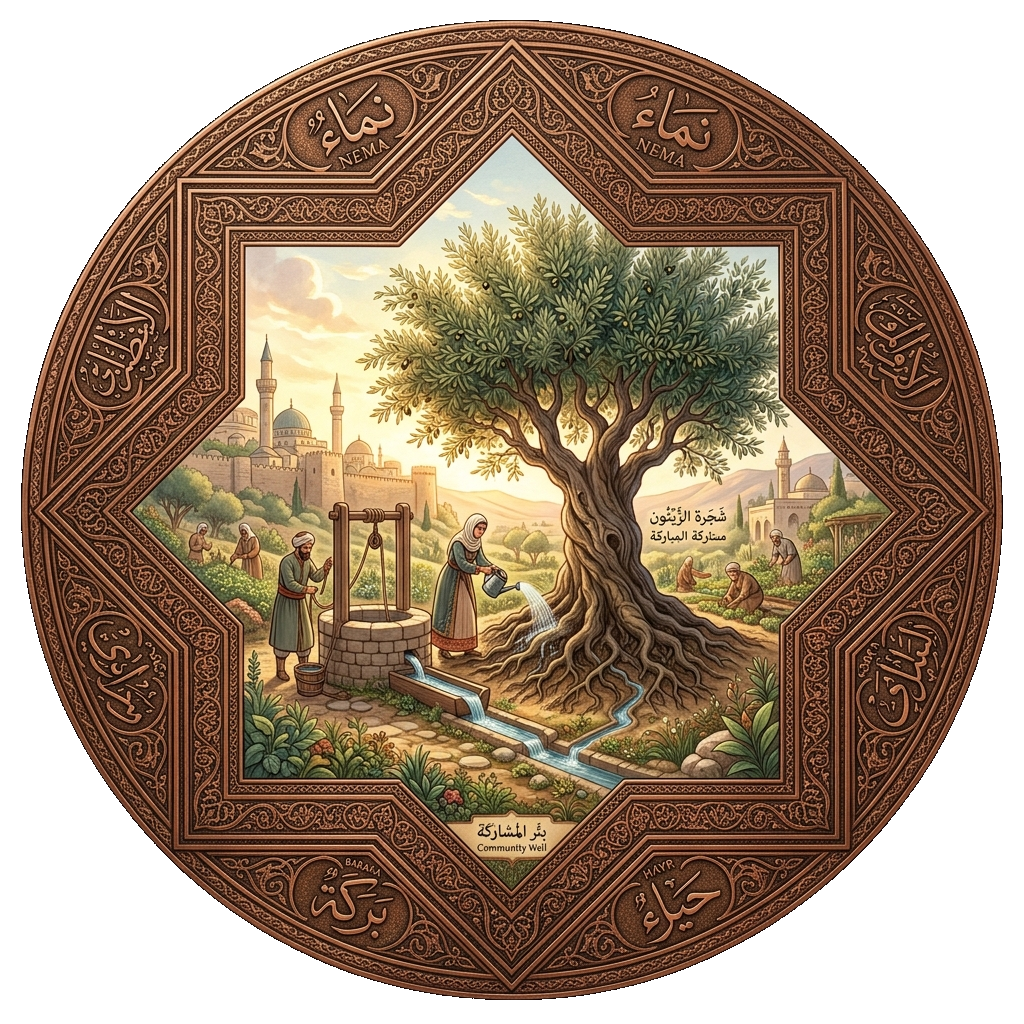
How will the work keep going?
Build the product, team, customer relationship and revenue plan together.
NEMA is for work that has moved beyond a bare idea and can show that it serves a real need. It clarifies who the work is for, why people would use it, how the team’s labour will be sustained and what resources the work needs to continue.
The aim is not growth for its own sake, but a sound and sustainable organisation capable of carrying the benefit it creates.
Which path comes next?
Not every good idea needs investment, and not every field initiative can live on donations alone.
The same work may pass through more than one path over time. Begin by identifying the need that matters most today.
If it should serve others openly: WAQF
Use the WAQF path when a work should open to wider use while its rights, conditions of use and continuing care remain protected.
If it must live through revenue and capital: NEMA
Use the sustainable-growth path when the work cannot continue without a team, product, customers, revenue, partnership or investment.
If it must be tested in real life: Valley
Use the Valley path when an idea needs to be tried through land, place, craft, production, education or direct field experience.
Support shaped by the real need
Identify the need first; then choose the right path through revenue, partnership, professional networks or capital.
Money may not be the main need. The work may require an experienced partner, better customer knowledge, a route to market, legal or financial guidance, production capacity or a trusted professional network.
Capital and acceleration
Prepare for capital and intensive guidance when the product is validated but the team, technology, production or route to market still needs support.
Community finance and infak
Prepare a trustworthy call when pre-orders, small community contributions, a support campaign, infak or a grant suit the nature of the work.
Entrepreneur and KARDESH Circle
Connect with the relevant Circle when the founder needs more than money: an experienced practitioner, operational support, professional competence or reliable partners.
Trade and livelihood
Bring pricing, contracts, customer rights, fair reward for labour, sales, loyalty, livelihood and İHSAN into the same business model.
Prepare the work
Before seeking capital, show why the work should continue and how it can sustain itself.
This is more than a pitch deck. The issue, people, product, value, revenue, costs, team and risks must become visible in the same picture.
01 Validate the real issue
Show whose need the work answers and whether that need can be observed in real life.
02 Explain the value you create
Why would someone use, buy or support it, and what would change for them?
03 Protect rights and relationships
Identify your responsibilities to customers, workers, partners, data subjects, children, families and the environment.
04 Build the livelihood model
Calculate where revenue will come from, what the costs are, how labour will be rewarded and when the work may sustain itself.
05 Choose the type of resource
Compare self-funding, sales, pre-orders, grants, community finance, partnership and investment, then choose what suits the responsibility carried by the work.
06 Write down the limits of growth
State when you would refuse to grow, what you would not compromise and which signs of HAYR matter alongside revenue.
Current status
This page explains the NEMA model; there is no open application, fund or investment call yet.
When a real programme period opens, the same record will state its dates, duration, capacity, delivery team, application conditions and the exact limits of the support offered.
Meeting format
- — Preparation Circle
- — Practitioner and specialist consultation
- — Assessment of the financing path
Duration and rhythm
- — Issue → value → livelihood → resource → limits
- — End-of-period preparation and direction decision
- — A fixed period shaped by the need
Who carries it?
- — Entrepreneur
- — Experienced practitioner
- — Finance and legal adviser
- — Trust and quality steward
Current status
No open cycle · preparation continues
The NEMA support model is in development; there is no open funding, investment or application cycle.
Safety and responsibility
This record does not promise funding, investment or partnership. When a real support path opens, rights, contracts, data, privacy, conflicts of interest and the responsible team will be stated clearly.
Intended outputs
When a work is published, it will appear here with its steward, terms of use and maintenance responsibility.
Where can you begin today?
If you already have working output, complete the six preparation questions. If the idea is still being tested, begin with Starters.
This is not an investment application. It is a first preparation step for thinking clearly about the product, customers, team and livelihood model.