


MEET REGULARLY · LEARN TOGETHER · TAKE RESPONSIBILITY
Read, listen, learn and move towards making something together in a circle.
Circles are a model for bringing together people who carry the same question or field of interest. They make room to think in your own language, listen to other experiences and turn learning into a small task or shared project.
People · Regular Meetings · Learning · Responsibility · Making
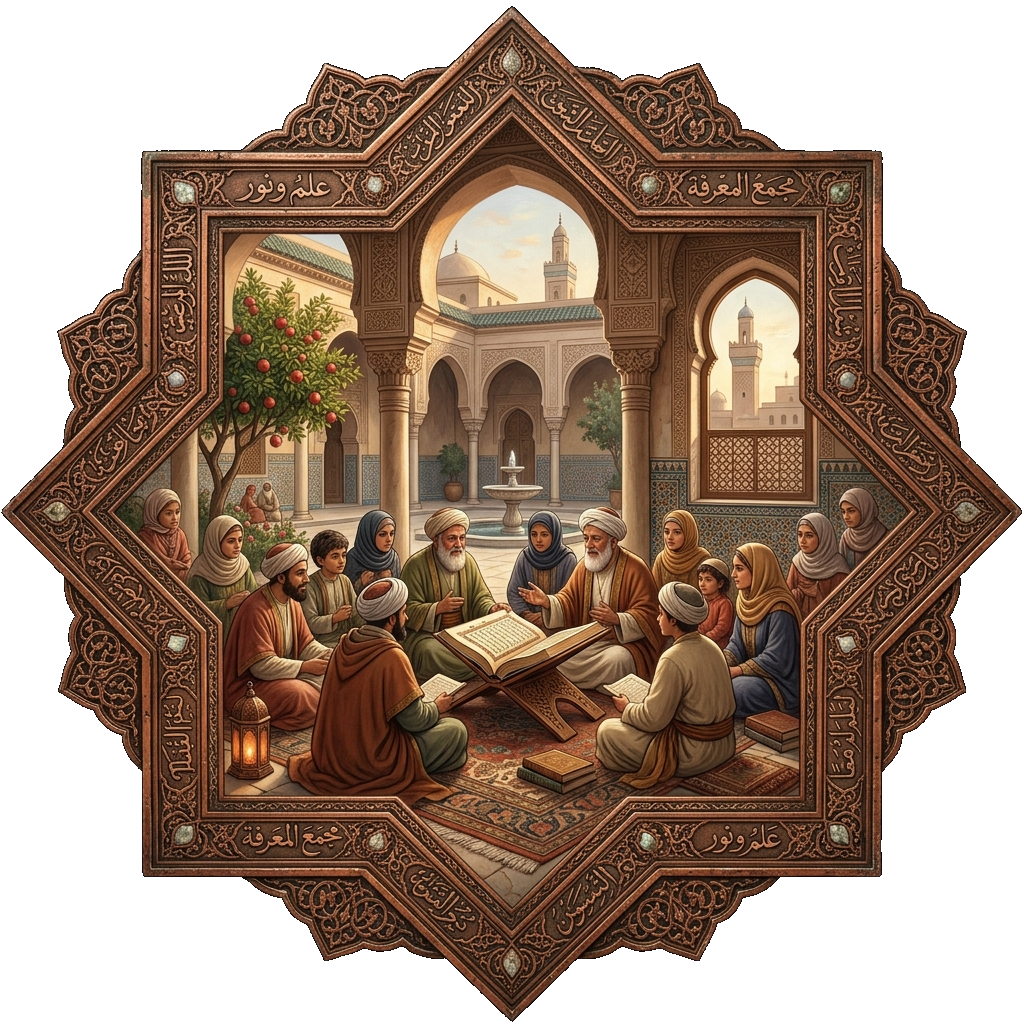
My place in the ecosystem
A regular way to learn together
Choose a subject or concern and meet regularly with people carrying the same question.
Circles create continuing small groups rather than one-off events. You choose a suitable circle, learn within a clear rhythm, take a manageable responsibility and contribute to the work that follows.
Listen, ask, try and continue: that is how a circle moves.
What do you do in a circle?
Bring your question, listen to others and turn what you learn into a small piece of work.
A circle meets to learn and move forward, not simply to talk. Each period begins with a clear question, source or real concern.
Understand in Your Own Language
Explain the question freely, read sources together and ask when you do not know.
Meet Other People
Listen to peers, guides and skilled practitioners who bring different experience to the same concern.
Take the Next Step
Turn learning into a short record, experiment, task, project or contribution to a Mission.
Which circle suits you?
There are different circles for learning a concept, deepening a craft or contributing to a real concern.
You might join a short starter circle, a vocational circle, a Mission circle or a multilingual youth circle. Before it begins, each circle explains its subject, rhythm, guides, intended participants and expected small output.
A circle does not gather people who already think alike; it gathers people willing to listen and move forward together.
What is a circle not?
A circle is not a chat group, webinar series, social feed, task board or teacher-centred class.
Its value is not measured by audience size, message volume, speaker prestige or meeting length. It is measured by learning, honest accounts, useful responsibility, correction and continuity.
Not an open-ended chat groupConversation without a clear purpose, source, rhythm, speaking rights or next responsibility is not yet a circle. Not a webinar seriesOne-way teaching can be useful, but it does not create peer learning, shared responsibility or handover. Not a social-media communityA circle values reliable relationships, appropriate privacy and useful records more than visibility or engagement. Not a task boardDistributing tasks cannot replace understanding the Mission or learning with the people affected by it. Not a teacher-centred classA guide brings knowledge and method; participants also bring questions, experience, feedback and work. Not a replacement for KARDESHA circle is a way of learning and working; KARDESH carries vocational guilds, mastery and intergenerational learning.
Circle types
Choose a learning, vocational, Mission, youth or language circle according to your need.
Each has a different subject and way of working. They share a regular meeting rhythm, mutual learning and a concrete next step.
RUYAH and Concept Circles
Explore ADAB, EDEB, SIDRA, MA, SEDD, IHSAN, MİLLET, HAYR and related concepts through sources and lived questions.
Vocational Circles
Work within KARDESH on professional practice, real cases, competence and learning between masters, journeymen and apprentices.
Mission Circles
Build a weekly rhythm of research, first-hand accounts, roles, risks and responsibilities around a shared concern.
Youth Builder Circles
Support young people through mother-tongue learning, language exchange, age-appropriate responsibilities and trained guides.
Family and School Circles
Bring families, educators, children and communities together around learning, care and practical shared work.
Language Bridge Circles
Help circles in different languages share sources, concepts, translations and useful work through reciprocal hospitality.
Mother tongue and guest language
Deepen in your own language and visit another-language circle to encounter new people and experience.
Translation tools can support communication. They do not replace thinking in your mother tongue or genuinely learning another language.
Primary circle
Understanding and making in your mother tongue
- Explain the concept and source in your own language
- Record local experience from families, communities and the field
- Protect vocational language and historical memory
- Create new content, translations and tools
- Carry a regular role and responsibility in the circle
- Help new people grow in your own language
Guest circle
Relationship with another language and community
- Observe the other circle's sources and work
- Join a bounded shared task or evaluation
- Learn where translation tools lose meaning or context
- Compare different uses of concepts and vocational terms
- Try carrying your own work into another language
- Do not treat visiting another circle as abandoning your primary language
A regular working rhythm
Circles meet regularly around a shared question and a manageable task.
The source to read, question to discuss, work to complete and short record to share are made clear for each week or period.
Purpose and Previous Step
Begin with a short reminder of unfinished work and the purpose of this meeting.
Source
Prepare the main text, field evidence, vocational case, differing views and what remains unknown.
Listen to Everyone
Participants share what they have seen, what they know and the question that remains open for them.
Work Together
Complete a small-group task, Mission contribution, translation, case study, prototype or decision preparation.
Decision and Record
Record the learning, differing views, responsibilities and next meeting in language everyone can understand.
Bridge Between Languages
Share a selected output or question with another-language circle and carry its response into the next meeting.
Make room for differing views
Everyone in a circle does not have to say the same thing.
Different experiences and objections are heard. A majority view is not automatically the final answer, and open questions return to sources and lived evidence.
Thinking together does not silence difference; it turns difference into an opportunity to learn and work together.
From conversation to shared memory
Each circle leaves a short, useful record that new participants can also understand.
Rather than archiving every word, a circle records the sources, important views, open questions, responsibilities and next step that genuinely need to be carried forward.
Source Note
Distinguish the primary text, translation, interpretation, field experience, vocational case and help received from a model.
First-hand Account
Record what a participant saw, knows and does not know, along with their position and any conflict of interest.
Difference Note
Do not flatten differing views into one sentence; record what further source or examination is needed and when to return to it.
Responsibility Record
Make clear who carries which bounded task, by when and for whom.
Privacy Layer
Protect records involving children, health, families, organisations, personal data or sensitive fieldwork through appropriate access boundaries.
Handover
Leave the context, glossary, open work and reasons behind earlier decisions clear for people who join later.
Working with Missions
A circle connected to a Mission becomes the team's regular place for learning and coordination.
The Mission carries the concern and intended result. The circle is where the team reads sources, listens across professions, prepares responsibilities and revisits what it has learned.
Understand the Concern
Read and question the Mission brief, real people affected, rights, risks and measure of success.
Gather First-hand Accounts
Make room for voices from the local field, professions, families, young people and those directly affected.
Prepare Responsibilities
Clarify the role, source, boundary and expected result rather than producing an ordinary task list.
Feedback and Correction
Bring the result of a Lab, a Build version or real use back to the circle for further learning.
Welcome New Participants
Help newcomers understand earlier decisions, mistakes, key terms and open questions.
Close or Continue
When a Mission ends, hand over its records, maintenance, possible WAQF path and any new concern clearly.
Online and face to face
Circles are not confined to screens; local meetings and fieldwork complete them.
Online meetings bring languages and places together. Face-to-face work helps people encounter the human being, place, material and real need more closely.
Online Circle
Provides a regular rhythm, shared documents, translation support, low-bandwidth options and protected access.
Local Face-to-face Circle
Builds direct relationships and shared work in a neighbourhood, school, KAHFE, workshop or Valley setting.
Hybrid Bridge
Carries local sources and outputs to distant language circles, and distant experience back into local work.
SAFAR Gathering
At selected times, circles meet through field visits, walks, conferences, camps, exhibitions or production gatherings.
Accessible Participation
Offers alternatives for barriers involving devices, connectivity, disability, language, caring responsibilities and time zones.
ADAB of Place
Protects hospitality, privacy, seating, food, worship, children, sound, recording and a considerate ending.
From meeting to making
A circle produces more than meeting notes: it leaves small outputs that others can use.
A source summary, question file, guide, task proposal, case record, translation or prototype idea is prepared clearly enough for another team to understand and continue.
Concept and Glossary Card
A mother-tongue explanation, source, differing uses, guest-language equivalent and open question.
Case and First-hand Record
A vocational or field case, the people affected, differing views, risks and learning.
Mission Summary or Evaluation
A short file gathering the concern, important findings, decisions and open responsibilities for the team.
Translation and Language Bridge
The primary text, human or model translation, bilingual evaluation and cultural context note are kept together.
New Participant Pack
The circle agreement, glossary, sources, earlier decisions, open responsibilities and contact paths.
WAQF Contribution
A suitable source, method, guide, record template or maintenance note is opened for other circles to use.
When a real Circle period opens, its participation route, meeting rhythm and preparation status will appear here.
Meeting format
- — face to face
- — online
- — hybrid
Duration and rhythm
- — Weekly or biweekly
- — Question → listening → negotiation → common trace
- — Recommended period: 4–8 weeks
Who carries it?
- — facilitator
- — Participant
- — Field guide or master
- — Registration and language bridge
Current status
No open cycle · preparation continues
The Circle model is in development; no open Circle, date or participation path has been published.
Safety and responsibility
Right to speak, privacy, working with children, multilingual registration and public sharing conditions are explained from the beginning according to the subject of the ring and its participants.
Intended outputs
From a circle to an experiment
Move to Labs when you are ready to test the question on a small scale.
Labs take a question developed in a circle and work with it through small experiments, tests and prototypes.