


RUYAH · REVEALED CONSTANTS AND LIMITS
A clear direction helps us learn, decide and build without losing our limits.Revealed Constants and Limits
The Qur’an and authentic Sunnah tell us who the human being is, what we are responsible for and which rights and limits we must protect. RUYAH carries that direction into today’s questions of knowledge, science, technology and institutions—without presenting a human interpretation, model or product as revelation itself.
Why constants matter
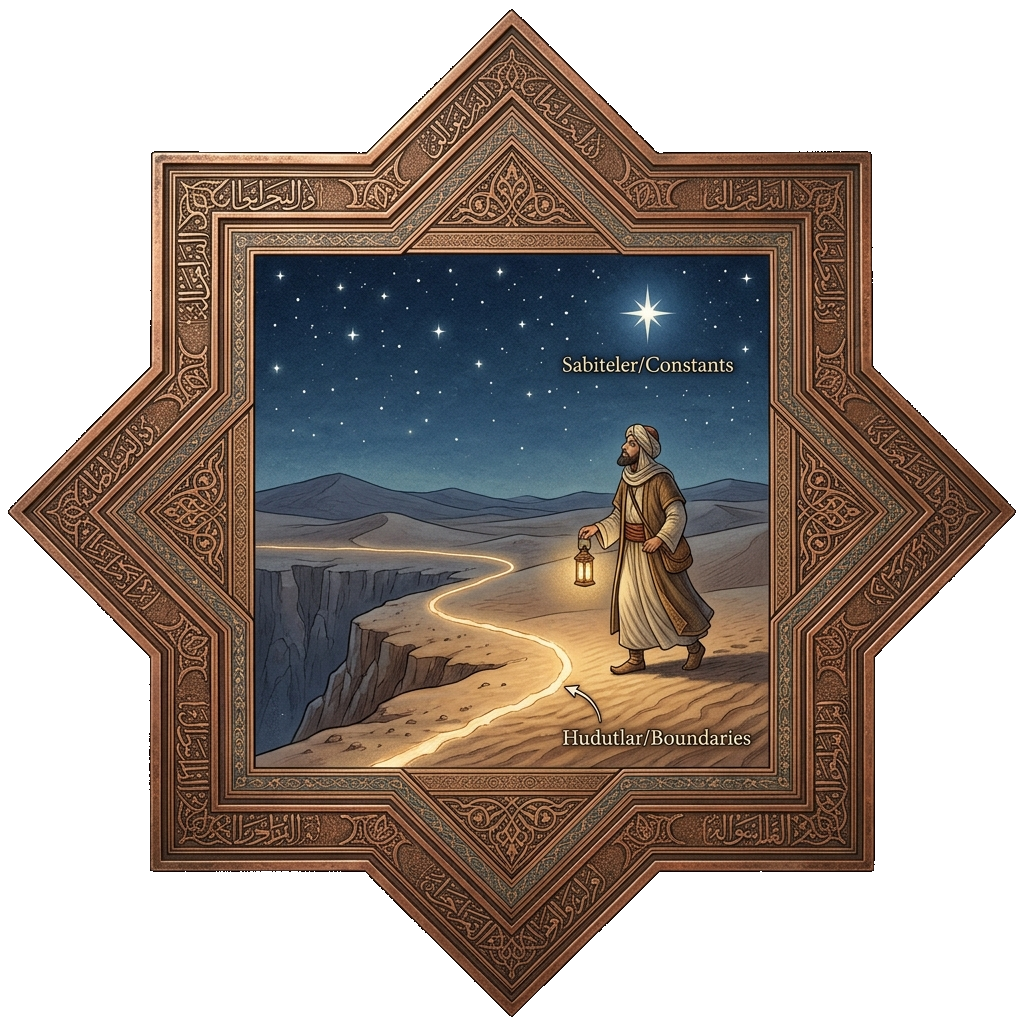
Constants do not close the future; they keep our direction clear as we build it.
Revelation teaches who the human being is, what we are accountable for and which measures govern our relationship with knowledge, power, nature, society and technology. RUYAH carries this direction into contemporary questions. It encourages new knowledge, models, institutions and tools while keeping every human choice open to examination and correction.
Constants keep the direction clear. Limits protect what must not be violated. Tajdid seeks sound responses for changing conditions.
Knowledge and making begin with human responsibility
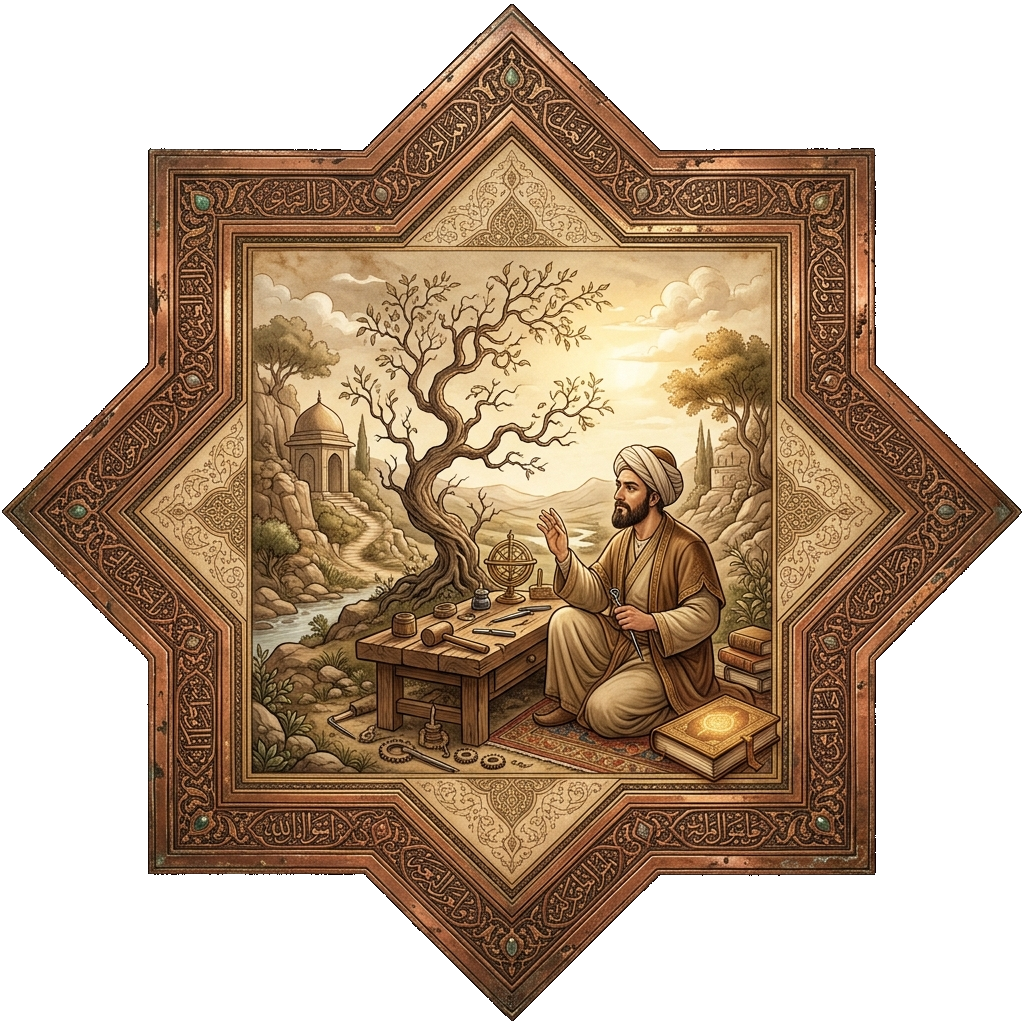
The human being is a servant of God, a bearer of amanah, and accountable for decisions and outcomes.
Before asking what a technology can do, we ask who is using it, for what purpose and with what responsibility. People learn, judge, build and carry the consequences. Greater knowledge and power therefore bring greater duties, not unlimited authority.
A servant addressed by revelation
Growing knowledge and power do not make a person absolute. We remain created beings, servants of God and answerable to the measure we have been given.
A bearer of amanah and rights
Body, family, children, wealth, knowledge, nature and technical capability come with duties of care, rights and accountability.
Responsible for judgement and outcome
A model, institution or tool may support a decision. The person still carries the purpose, the judgement and responsibility for what follows.
Knowledgeable, yet open to correction
Tafsir, science, institutions, software and models are human work. They must show their sources and methods and remain open to examination, correction and rebuilding.

What comes from revelation, and what comes from us?
Revelation is binding. Translation, tafsir, RUYAH readings and institutional choices are human efforts to understand and act.
The Qur’an is the Qur’an in its Arabic wording. Translations, tafsir, commentaries and contemporary explanations arise through human language, learning, time and method. Sunni creed, kalam, fiqh and usul provide an inherited discipline for this work. RUYAH draws on that inheritance without claiming to exhaust the meaning of revelation.
Honouring the source does not diminish human learning. It helps us recognise what each statement can claim and build more trustworthy knowledge.
Direction and protection
Constants keep the direction and purpose clear; limits protect rights, life and justice as our capabilities grow.
Constants tell us which understanding of truth, the human being and life guides us. Limits protect people, family, privacy, body, lineage, property and justice as we develop knowledge, technology and institutions.
What remains binding?
Revealed constants
Tawhid, worship, the Qur’an and authentic Sunnah, human createdness and accountability, justice, rights, amanah and sound purpose give binding direction.
- Tawhid, worship and accountability
- The Qur’an and authentic Sunnah
- Human createdness and moral responsibility
- Justice, rights, amanah and ADAB
What must be protected?
Revealed limits
They make clear the limits around halal and haram, harm, privacy, body, lineage, property, representation and judgement.
- Halal, haram and protection from harm
- Privacy, family, children and lineage
- Body, property and the rights of others
- Limits of knowledge, models, tools and judgement
Five questions for a new matter
We consider the source, the witness, created nature, the limits of knowledge and the protection required.
A scientific claim, technology, model or institutional intervention cannot be judged by performance alone. We ask what it rests on, how we know, what kind of created being or reality it concerns, where our knowledge must stop and what the work may do in real life.
Source and usul
Which revealed constant, fiqh judgement, principle of usul or scholarly source is relevant? Have source and interpretation been kept distinct?
See how the levels differWitness and evidence
Who encountered the matter, under what conditions and through which instrument? Can we distinguish observation, report, measurement and interpretation?
Explore truth and representationMA
What is the created nature of the person, living being, body, household, place or thing before us? Have we reduced it to data, resource or function?
Read about MASIDRA
Where do our knowledge, model, judgement and intervention reach their limit? What do we know, what are we representing and what remains unknown?
Read about SIDRASEDD
Which legal, technical, spatial, institutional or editorial measures will protect the limit in practice?
Explore SEDDHow do we use ayat and hadith?
The source guides the person; it is not used as a label that certifies a human product.
The Qur’an and Sunnah guide our understanding of the human being, truth, purpose and limits. A piece of software, model, game, institution or programme is still a human work. We therefore explain the choices behind it, the evidence it uses, what it is for and who carries responsibility for its effects.
Source and context stay visible
The Arabic wording and reference of an ayah, or the transmission record of a hadith, are shown with the translations, tafsir, commentaries and contextual sources used.
Different levels stay distinct
Revelation, translation, scholarly explanation, a RUYAH reading and an application choice are not presented as one voice.
A product needs its own evidence
A dataset, model, software, game or institution is examined through its source, purpose, method, real effects, rights and relevant SEDD conditions.
Human words have human authors
The author, version, date, sources and path of correction remain visible for translations, tafsir, commentary and institutional decisions.
How is a source opening published?
A source is shown when its origin and context are clear and the human explanations around it can be recognised and corrected.
The aim is not to make religious speech bureaucratic. It is to prevent unsourced quotation, false certainty and the impression that an institutional reading is revelation itself. Examination should protect the source and leave a visible path for correction.
01 Verify the source
Record open, traceable sources for the ayah, hadith transmission, translation, tafsir and scholarly context.
02 Seek fiqh and usul examination
People with the relevant competence examine the context, relation to judgement and claims made by a contemporary application.
03 Keep the levels visible
Show revelation, translation, tafsir, a RUYAH reading and an application as distinct levels that a visitor can recognise.
04 Keep a correction trail
Record the responsible editor, examiner, date, source version, differing notes, next examination and correction history.
Continue from here
Keeping a revealed direction does not mean withdrawing from contemporary questions.
Truth and Representation asks what our observations, data and models can claim. Constants and Tajdid asks how we can renew judgements, institutions, representations and tools without losing the direction.
Deeper reading
Continue in the Külliyat Library
The portal summary offers direction; the Külliyat record keeps the source, context, and path to longer reading visible.
Atlas
RUYAH Concept Atlas
A concept atlas showing the relations among ADAB, EDEB, TE'DIB, SIDRA, MA, SEDD, İHSAN, SAHN, TEMSİL, MİLLET, and WAQF.
Open the Külliyat recordBook
RUYAH, SAHN.BA and SEMANIYYA Külliyat
A preparation record for a proposed Külliyat that would bring together sources related to RUYAH concepts and the portal architecture.
Open the Külliyat recordReport
BAI Human Oversight Report
A preparation record for a proposed report on human decision, contestability, reversal, representation, and responsibility in the use of models and automation.
Open the Külliyat record