

SIDRA AND MA · KNOWLEDGE, LIMITS AND CREATED LIFE
Do not deny what you have seen. Do not claim knowledge of what you have not.
We meet the world by seeing, listening, touching, comparing and reasoning. SIDRA asks how far our knowledge, representation and power to intervene can honestly go. MA reminds us that people, living beings and places are always greater than our models, data and plans for using them.


Why they belong together
Honest observation opens the encounter. SIDRA keeps the claim within its limit. MA keeps the being greater than our use of it.
We first meet people, living beings, soil, water and relationships through experience. We describe what we see and hear, then deepen our knowledge through comparison, reliable reports, measurement and instruments. SIDRA prevents this knowledge from becoming a claim to total certainty; it also prevents instruments and experts from erasing lived testimony. MA asks us to meet what exists not merely as useful material or data, but as created life toward which we carry responsibility.
Say honestly what you have seen. Say just as honestly what you do not yet know.
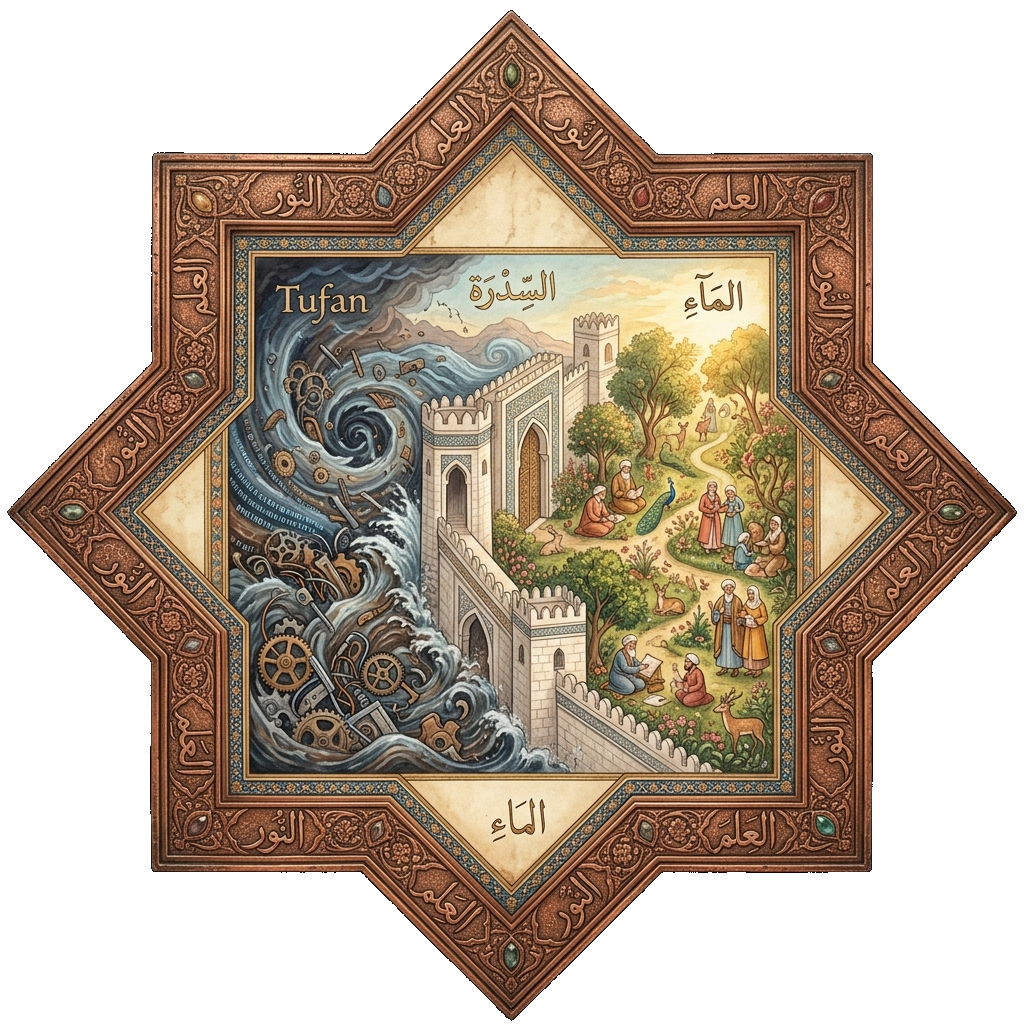
When models appear to know more than they do
Use powerful tools without handing them human understanding and judgement.
Generative models, data systems and automation can extend human learning and making. Their outputs are not observation, understanding, discernment (FURKAN) or moral judgement. SIDRA makes visible what a model can calculate from which data, where it is only estimating and where it should not answer. MA prevents a person from being reduced to a profile, score or data trail—and prevents living beings and nature from being reduced to exploitable resources. Intelligence and responsibility remain human; models and machines remain tools within BAI’s BA Internet wing.

What is SIDRA?
SIDRA is the discipline of knowing how far our knowledge, representation and intervention can honestly go.
SIDRA is not a wall against learning. It asks us to show the source, method, degree of certainty and unanswered part of a claim. It distinguishes direct observation from a report, measurement from selected data, data from a model and a model from a wider interpretation of reality. It also stops us from treating technical possibility as automatic permission, wisdom or HAYR. **SIDRA does not silence a child’s testimony. It protects that testimony without turning it into a claim beyond its evidence.**

What is MA?
MA asks us to meet created beings as more than our measurements, models and purposes of use.
MA does not claim that people can fully possess the inner reality of every being. It reminds us that a user profile does not exhaust a person, biological data does not exhaust a body, soil is more than an input, water more than a quantity, an animal more than an industrial unit and a plant more than raw material. Each is encountered within creation, fitrah, relationship and responsibility. **Before asking “What can I gain from this?”, MA asks “What is this, what rights and relationships does it carry, and what responsibility do I have toward it?”**
Revealed direction and binding limits
Constants keep the direction clear. Limits show where a claim, authority or intervention must stop.
SIDRA and MA are not independent sources of truth. Within RUYAH they work under the direction of the Qur’an, authentic Sunnah, Sunni creed, usul and fiqh, together with observation, sound reason, reliable reports and qualified knowledge. Constants show what remains binding, limits show which authority cannot be exceeded, and Tajdid seeks responsible answers under changing conditions.
What keeps the direction clear?
Revealed commitments
Tawhid, servanthood, the Qur’an and authentic Sunnah, human accountability, rights, justice, lawful and unlawful boundaries, and ADAB.
- The Qur’an and authentic Sunnah
- Sunni creed, usul, and fiqh
- Human worship and responsibility
- Truth, justice, and ADAB
Where must we stop?
Revealed and methodological limits
The strength of a knowledge claim, authority to represent, privacy, intervention, human judgement and the rights of created life.
- Limits between knowledge and claim
- The distinction between human responsibility and the role of models and machines
- Privacy and the right to representation
- Authority to intervene and dispose
From recognition to protection
ADAB helps us put each relationship in the right order. SEDD protects that order when harm or overreach becomes possible.
MA reminds us what kind of being or relationship we face. SIDRA marks the limits of what we know and may do. ADAB guides the place, measure and purpose of people, knowledge, tools and actions. SEDD turns that guidance into proportionate technical, legal, spatial and institutional protection.
ADAB
Guides the place, measure, limit and purpose of created beings, knowledge, people, tools and actions.
Read ADAB and EDEBSEDD
Builds proportionate and accountable protection for privacy, children, data, representation, and intervention.
Read SEDDFiqh and Usul
Clarify the source, qualification, purpose, and practical limits of judgement in new matters.
See how careful judgement is organisedRevealed Constants and Limits
Distinguishes revealed sources from human interpretation, RUYAH application and institutional practice.
Open the source familyReduction and responsibility
Measure what can be measured without treating it as the whole of a person, a living being or a place.
RUYAH does not reject quantitative knowledge or useful tools. It refuses to make quantity, data and usefulness the complete account of what exists.
Reductionist reading
Only what can be measured and used
- Person: profile and performance score
- Body: biological data alone
- Living being: material or industrial unit
- Soil: production input
- Water: quantity for consumption
- Knowledge: an accumulation of data
- Model: an explanation that replaces reality
- Technology: capacity presented as inevitability
A fuller reading through RUYAH
Created life, relationship and responsibility
- Person: servant of Allah, accountable and entrusted
- Body: a domain of dignity and responsibility
- Living being: created and carrying rights
- Soil: a living field requiring care
- Water: life, sharing and limits
- Knowledge: source, degree and responsibility
- Model: a representation for a limited purpose
- Technology: a tool under human judgement
The two wings of BAI
BA Intelligence develops human discernment and responsibility. BA Internet organises models and machines as accountable tools.
SIDRA and MA make this distinction practical. People carry understanding, will, discernment, sound judgement and responsibility. Data, models, software, automation and machines remain human-made tools whose sources, limits and purposes should be visible.
BA Intelligence
Cultivates human observation, understanding, will, discernment (FURKAN), sound judgement (RÜŞD) and responsibility.
Open BA IntelligenceBA Internet
The BAI wing where people build data, models, software, media, automation and machines with visible sources, limits and human accountability.
Enter BA InternetTruth and Representation
Keeps reality, observation, measurement, selected data, models and human interpretation from replacing one another.
See the levels of knowledgeLearning in real settings
VALLEY, SEFER and KARDESH bring SIDRA and MA into contact with real places, people and consequences.
Limits and created life are not understood from texts alone. People meet soil, water, living beings, professions and communities in place; they see what their decisions produce and open their understanding to shared correction.
VALLEY
A place for sustained learning through soil, water, living beings, labour, care, neighbourliness and continuity.
Enter VALLEYSEFER
A journey beyond familiar surroundings to meet different places, communities and questions through direct encounter and service.
Open SEFERKARDESH and Labs
Bring lived observation together with professional knowledge, shared correction and limited experiments.
See the shared fieldRelated concepts
SIDRA and MA connect honest knowledge with responsible action.
OBSERVATION AND TESTIMONYMeeting created reality directly, reporting what one has seen and opening that account to shared examination. ADABGuides created beings, knowledge, people, tools and actions into the right relationships. FURKANDistinguishes witnessing from interpretation, data from models, and possibility from legitimacy. RÜŞDMature qualification to carry judgement, choice, action, and consequences in a defined domain. REPRESENTATIONNot reality itself, but a human-made account that should disclose its source, purpose and limits. SEDDTurns SIDRA’s awareness of limits into protective architecture against harm and FASAD. IHSANCarrying knowledge, relationships, professions and work truthfully and beautifully, conscious that Allah sees. BAIDistinguishes human intelligence and responsibility from the role of models and machines. VALLEYMakes MA visible through lived reality, care, labour, and continuity. MILLETA community carrying a shared revealed direction across languages, places, professions and generations.
A simple sequence
Observe honestly. Keep the claim within its evidence. Meet created life as more than your use of it.
ADAB orders the relationship. FURKAN distinguishes. EDEB carries the measure into action. RÜŞD matures judgement. SEDD protects. IHSAN helps complete the work truthfully and beautifully.
Deeper reading
Continue in the Külliyat Library
The portal summary offers direction; the Külliyat record keeps the source, context, and path to longer reading visible.
Atlas
RUYAH Concept Atlas
A concept atlas showing the relations among ADAB, EDEB, TE'DIB, SIDRA, MA, SEDD, İHSAN, SAHN, TEMSİL, MİLLET, and WAQF.
Open the Külliyat recordBook
RUYAH, SAHN.BA and SEMANIYYA Külliyat
A preparation record for a proposed Külliyat that would bring together sources related to RUYAH concepts and the portal architecture.
Open the Külliyat recordReport
BAI Human Oversight Report
A preparation record for a proposed report on human decision, contestability, reversal, representation, and responsibility in the use of models and automation.
Open the Külliyat record