


RUYAH · ADAB AND EDEB
Knowing what is right is not enough; how we carry it into life matters too.How do we carry what is right?
ADAB asks what measure and relationship help us put things where they belong. EDEB is that measure lived in speech, relationships, work and judgement. This page explores how knowledge becomes conduct and responsibility.
Two forms, one question
ADAB shows the measure; EDEB carries that measure into life.
ADAB and EDEB belong to the same word family. SAHN-I BA does not use them as unrelated dictionary roots. Our working distinction within RUYAH is this: ADAB asks what measure and relationship should guide the way we meet people, knowledge, speech, work and tools. EDEB is the way a person lives that measure while speaking, learning, working, judging and making.
ADAB shows what measure should guide an act; EDEB shows how a person carries that measure.
From knowledge to responsibility
Learning, living, discerning and taking responsibility
These concepts are not interchangeable. Together they describe a path of learning and maturity.
01 ADAB
Seeking the sound measure and relationship between people, knowledge, speech, work and tools.
02 TA’DIB
Learning that measure, practising it and gradually forming character through it.
03 EDEB
The measure becoming visible in speech, relationships, vocation, judgement and conduct.
04 FURQAN
Discernment between right and wrong, knowledge and data, people and tools, HAYR and harm.
05 RUSHD
The maturity to carry the responsibility for a judgement and its consequences in a particular field.
06 RESPONSIBILITY AND TRUST
Bearing the account of knowledge, authority and the consequences of what we do.
When things are misplaced
Confusion does not remain an abstract error; it can harm people, relationships and shared life.
We misplace things when we treat a model’s estimate as a final judgement, a person’s data trail as their whole identity, or technical possibility as proof that something is right. The same mistake can distort speech in a family, authority in a profession, knowledge in education and power in an institution. RUYAH makes the confusion visible; EDEB corrects conduct; where needed, SEDD stops harm from spreading. A loss of ADAB is therefore more than poor manners: it allows error to settle into life.
Knowledge, authority or tools placed wrongly can grow into injustice and wider harm.
When we make and communicate
To represent something responsibly is to carry its source, limits and consequences too.
A text, translation, image, model, software tool, game or institution is a human work; it is not truth itself. ADAB asks what we are making, why and for whom. EDEB carries the responsibilities of naming sources, seeking permission, protecting privacy, admitting error and maintaining the work. IHSAN calls us to complete sound work in a way that is clear, useful, beautiful and sustainable—not merely impressive.
A responsible representation makes its source, limits, human responsibility and path of correction visible.
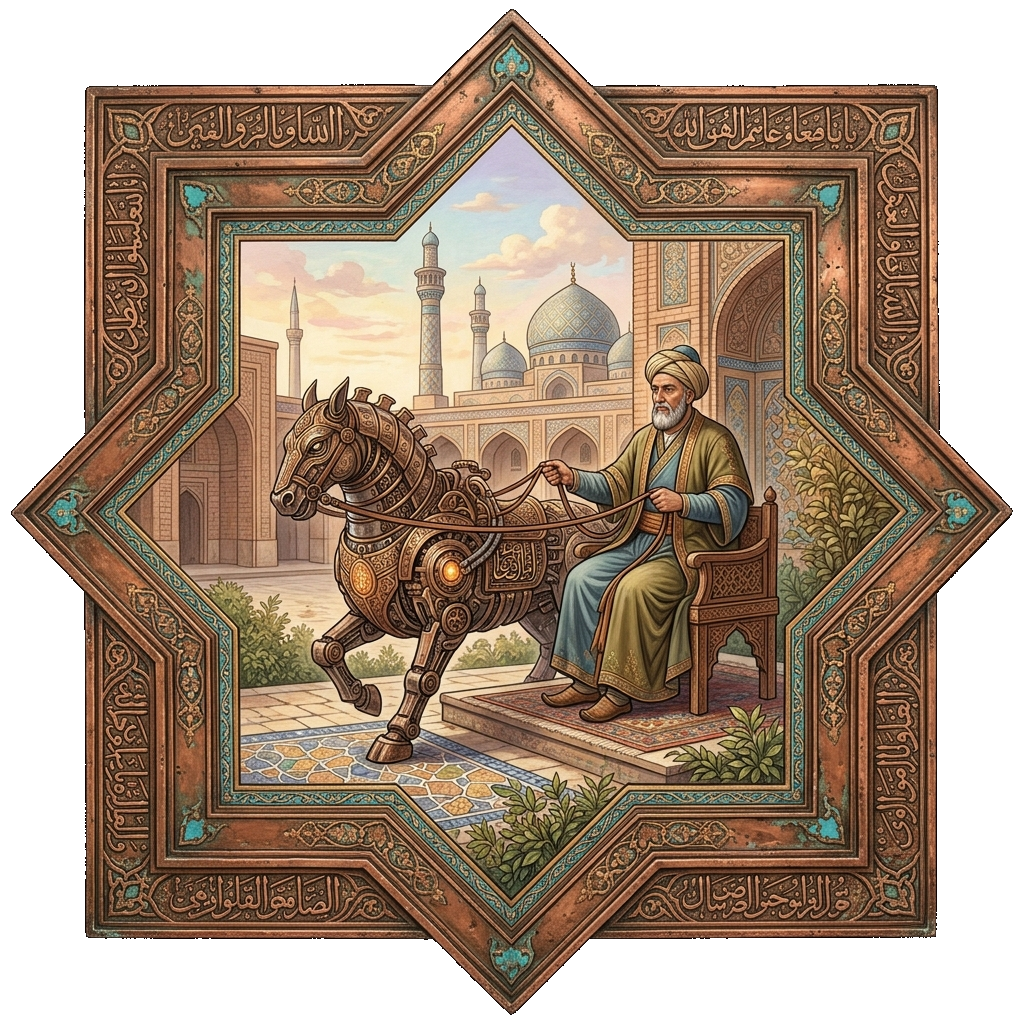
People and tools
A tool may be powerful; responsibility for judgement and consequences remains human.
BA Intelligence names the human capacities to understand, discern, decide and bear account. BA Internet is the field in which we work with data, models, software, automation, media and machines. ADAB keeps people and tools in their right relationship; EDEB requires us to use tools with openness, competence and responsibility. A model can calculate and suggest. A person remains accountable for judging what is right, just and directed toward HAYR.
Machines can assist; people remain accountable for the decision.

Protection and limits
SEDD does not exist to block sound work; it helps make that work possible while protecting people and trust.
ADAB shows what needs protection. EDEB shapes how a person honours that boundary. When a real risk appears, SEDD can limit data collection, protect privacy, preserve human judgement and objection, and stop or withdraw a harmful system. It does not apply the same weight of control to every activity; protection should be proportionate to the risk and responsibility involved.
Protection serves ADAB when its purpose is clear and its limits are proportionate to real risk.
Concepts working together
ADAB and EDEB gain practical meaning alongside other RUYAH concepts.
These concepts are not a single chain of control. They answer different questions and support one another in responsible life and work.
SIDRAShows what evidence supports a claim and where the claim must stop. MAReminds us not to reduce people and created life to data or usefulness. FURQANDevelops discernment between right and wrong, knowledge and unsupported claim. RUSHDNames the maturity to carry knowledge and power through responsible judgement. SEDDProtects people, rights and relationships through limits proportionate to real risk. IHSANCompletes sound work so that it is clear, useful, beautiful and cared for. BARecalls a direction opened with the Basmalah and the responsibility carried by a human being. KARDESHCarries vocational knowledge through mastery, solidarity and responsibility for the next generation. WAQF AND UMRANOpen beneficial work to shared use, long-term care and a living common order.
From knowledge into life
Do not only learn the measure; live it in your speech, work and what you make.
Continue to Representation and IHSAN to see how human work can remain open and accountable, or to SIDRA and MA to explore the limits of knowledge and intervention.
Deeper reading
Continue in the Külliyat Library
The portal summary offers direction; the Külliyat record keeps the source, context, and path to longer reading visible.
Atlas
RUYAH Concept Atlas
A concept atlas showing the relations among ADAB, EDEB, TE'DIB, SIDRA, MA, SEDD, İHSAN, SAHN, TEMSİL, MİLLET, and WAQF.
Open the Külliyat recordBook
RUYAH, SAHN.BA and SEMANIYYA Külliyat
A preparation record for a proposed Külliyat that would bring together sources related to RUYAH concepts and the portal architecture.
Open the Külliyat recordReport
BAI Human Oversight Report
A preparation record for a proposed report on human decision, contestability, reversal, representation, and responsibility in the use of models and automation.
Open the Külliyat record