


RUYAH · SAHN
An idea is not complete until it meets people and real life.Ideas come to life when they meet people.
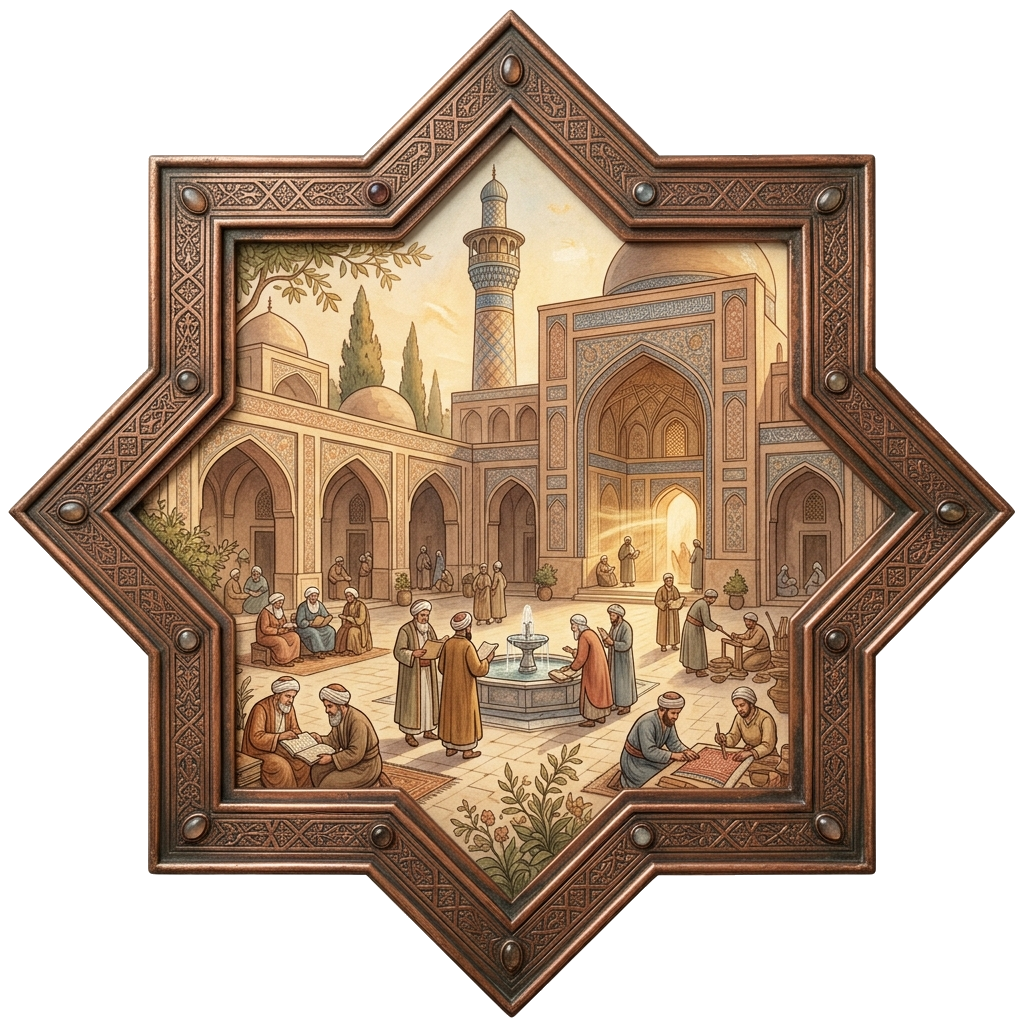
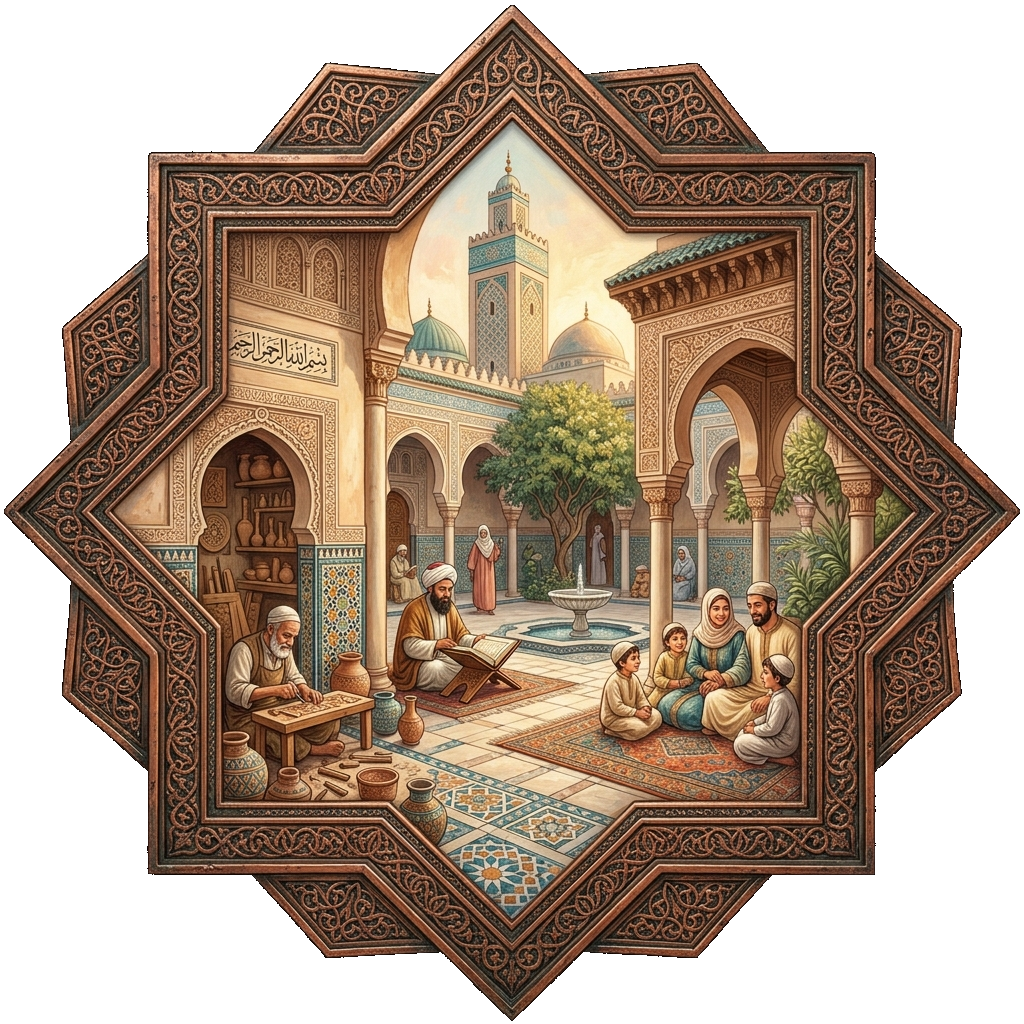
SAHN is a shared courtyard where thought finds an addressee, people meet, work is tested and consequences are carried together. The courtyard may be a screen, classroom, workshop, table or field setting.
What is SAHN?
SAHN is a shared courtyard where thought meets people and seeks a place in real life.
RUYAH gives us a direction; SAHN opens the place where that direction meets people, questions, different experiences and the conditions of life. People do not remain spectators here. They listen to one another, work on a real concern, run small trials, share what they make and learn from the result. SAHN is therefore more than a website or building. A table at home, classroom, vocational circle, workshop, journey or digital workspace may also become a SAHN.
SAHN is opened not to be seen, but to meet, work together and carry responsibility for what emerges.
The three movements of SAHN
Meet, work together and carry the result.
SAHN does not leave thought in conversation; it brings it into contact with people, work and real life.
Meet
Bring the right people and different experiences together around a shared concern.
Work together
Listen, ask, share roles, run a small trial and learn from one another.
Carry the result
Make the value, limits, mistakes and future of the work visible.
What is SAHN not?
SAHN is not a stage built to gather a crowd or keep showing content.
An open, fast or popular space does not automatically become a shared courtyard. SAHN protects people, relationships and the consequences of the work.
Not a performance stagePeople are not displayed for applause, prestige or visibility; the work responds to a real need. Not an endless feedInstead of consuming attention, it makes room to pause, speak, learn and finish something. Not a place where everything is publicPrivacy, children, entrusted information and work that is not ready remain protected. Not a single podiumNo person, institution or algorithm controls every word; nearby circles and different experiences may speak. Not only digitalA portal is a courtyard, but so are a table, classroom, workshop, garden, journey and real field setting.
How does an idea enter life?
Work is prepared, meets the right people, is tested and changes through what it learns.
Not every idea is published at once and not every trial is called a success. SAHN opens a clear path between preparation, sharing and real life.
Preparation
The idea is studied, discussed and drafted in a safe place where it may mature and make mistakes.
Threshold
People decide what will be shared, why, with whom and under which conditions.
Meeting
The work meets the right addressees and receives questions, objections, experience and new contributions.
Sharing
Purpose, sources, responsible people, known limits and the path for feedback are made clear.
Real life
The work is tested through people, time, cost, place and actual consequences.
Return and correction
What was learned is recorded; the work continues, changes or stops when necessary.

SAHN-I BA
SAHN-I BA is the shared name for different meeting and working courtyards opened in the same direction.
BA recalls the intention and human responsibility with which an action begins. SAHN opens the courtyard where that direction meets people and life. A Circle, KARDESH guild, workshop, SAFAR, Valley route, school gathering or digital workspace may become a courtyard of SAHN-I BA when it brings people together to learn, make and serve in the same direction. SAHN.BA is the digital main gate to these courtyards.
BA recalls the direction; SAHN opens the place where that direction meets people.
How do we enter the courtyard?
The ways of SAHN are practical: know your purpose, welcome the guest, listen, make room for difference and protect what is entrusted.
These practices do not make the space heavier. They help people work together with confidence and purpose.
Know why you cameSay clearly which concern, learning or service you are joining. Welcome the guestOpen an understandable way in for a new person’s language, experience and questions. Listen and share the floorDo not hold the conversation in one hand; listen in context and make room for others. Carry disagreement wellDo not treat objection as hostility; discuss evidence, experience and consequences together. Protect what is entrustedProtect private information, children, personal data and work that is not ready to be shared. Leave a trace and a way backKeep notes, decisions, responsible people and paths for correction from disappearing.
Open and correctable work
A word or product shared in SAHN does not hide where it came from or how it can be corrected.
Openness does not mean publishing everything. It means making the purpose, source, limit and responsibility of what is shared visible.
Source
Show where the information, data, image or idea came from.
Responsible people
Name who prepared the work, who made the judgement and who can be reached.
Known limits
Explain what is known, what is not known and under which conditions the work is useful.
Feedback
Open a real path for objections, error reports and new contributions.
Human judgement
Even when a model or automation advises, keep the person who decides and carries the result visible.
Care
Do not abandon the duty to update, correct, stop or hand over the work after publication.
Digital and physical courtyards
SAHN may begin on a screen, but it opens into human relationships, work and real life.
Digital tools bring distant people together and build shared memory. Physical meetings, fields and making test a claim under the conditions of life.
Portal
A digital entrance where people find the gates, content, projects and ways to take part.
Circle
A regular circle for meeting, learning, conversation and shared memory.
Table and KAHFE
A meeting where people know one another more closely and build trust through hospitality and conversation.
Lab and Build
A place where an idea becomes a small trial, a working product and something used by real people.
SAFAR and Valley
An experience where work is tested on the road, in the field, in nature and under different living conditions.
WAQF
A way to open suitable work to shared benefit while protecting rights, sources and responsibility for care.
From thought to living order
A direction opens towards UMRAN when it builds a continuing life that connects people and work.
SAHN is not a single event or publication. It creates continuity in which learning returns to work, service and a new generation.
Understand the direction
Explain why people are gathering and which concern they are serving.
Bring people together
Build circles where different languages, generations, vocations and experiences may meet.
Choose the concern
Work on a need people actually live with rather than an abstract agenda.
Test small
Try the idea in real life at a scale where cost and risk can be carried.
Share the benefit
Bring useful work to the right addressee and open a path through WAQF or another form of continuity where appropriate.
Return and renew
Follow the result, correct mistakes, return learning to the circle and begin the next work.
Encounter instead of a feed
A content feed carries attention; SAHN gathers people around a concern, relationship and result.
Digital publishing has value, but SAHN does not treat the work as complete until watching is connected to meeting and making.
Infinite feed logic
Endless feed
- Shows more content
- Counts a person as a viewer or user
- Prioritises speed and visibility
- Can hide sources and responsibility
- Builds no relationship after watching
The order of SAHN
SAHN
- Gathers people around a concern and purpose
- Treats a person as an addressee and contributor
- Makes time to listen, test and finish
- Keeps sources, limits and responsible people visible
- Connects the result to new learning and service
Ways to take part
Every gate in SAHN.BA opens a different way to meet and work.
Choose a circle, concern, vocational community, journey or shared-benefit effort that fits where you want to begin.
Main Courtyard
See all the gates and choose the beginning closest to you.
Visit the main courtyardCircles
Join regular circles for learning and conversation.
See the circlesKARDESH
Take part in vocation, mastery and learning between generations.
Discover KARDESHMissions
Work on a real concern with people from different fields.
See the concernsSAFAR
Open your learning to journeys, field settings and different geographies.
Discover SAFARWAQF
Open suitable work to shared benefit and continuing care.
See WAQFSix readiness questions
A space becomes SAHN through how it carries people, purpose and responsibility—not through its decoration.
Before opening a gathering, project or platform, give clear answers to these six questions.
Why are we meeting?Can everyone understand the concern, need and hoped-for benefit? Who is here?Are the addressees, guests, responsible people and decision makers visible? How will we work together?Are the ways to speak, share tasks, decide, object and give feedback clear? What must we protect?Are there proportionate boundaries for privacy, children, entrusted information and real risks? What will happen in real life?In whose life, at what scale and in what way will the work be tested? Who will carry it afterwards?Are responsibility for care, correction, closure, handover and returned learning clear?
Where to go next
See how people become MILLET around a shared direction and how useful work opens towards UMRAN.
The MILLET page explains the human and organisational bond; HAYR and UMRAN show how benefit becomes a continuing way of life.
Deeper reading
Continue in the Külliyat Library
The portal summary offers direction; the Külliyat record keeps the source, context, and path to longer reading visible.
Atlas
RUYAH Concept Atlas
A concept atlas showing the relations among ADAB, EDEB, TE'DIB, SIDRA, MA, SEDD, İHSAN, SAHN, TEMSİL, MİLLET, and WAQF.
Open the Külliyat recordBook
RUYAH, SAHN.BA and SEMANIYYA Külliyat
A preparation record for a proposed Külliyat that would bring together sources related to RUYAH concepts and the portal architecture.
Open the Külliyat recordReport
BAI Human Oversight Report
A preparation record for a proposed report on human decision, contestability, reversal, representation, and responsibility in the use of models and automation.
Open the Külliyat record