


RUYAH · MILLET
Looking in the same direction is not enough; MILLET grows through knowing one another, working together and caring for those who follow.Work together. Continue together.
MILLET is not one language, one country or a crowd of people assumed to be alike. It is the way people of different languages, vocations and generations become neighbours around the same RUYAH, carry real concerns together and open what they know to the young.

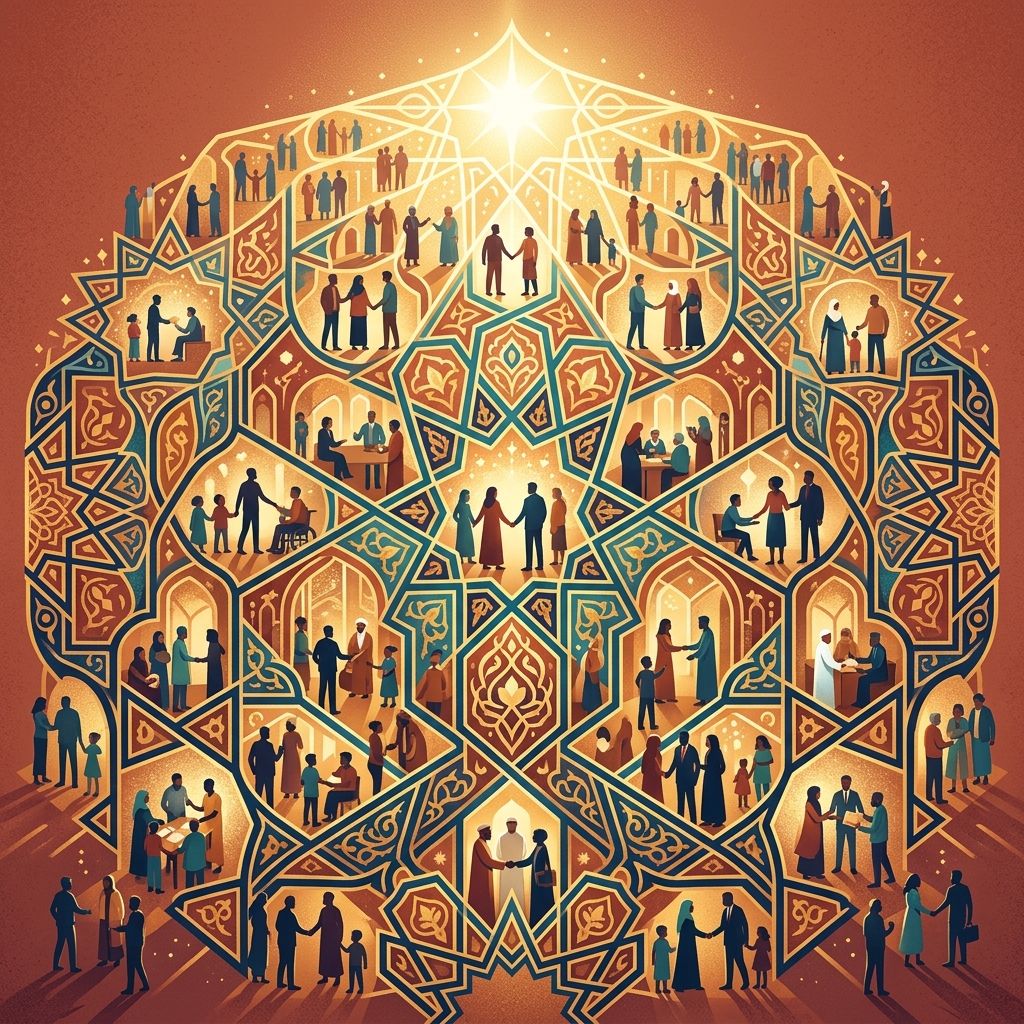
What is MILLET?
MILLET is the bond of people who live a shared direction through everyday relationships, shared work and generations.
Within RUYAH, MILLET is not the population of a modern state or a mass assumed to carry one identity. It is a living order in which people know one another by name, language, family, vocation and experience; take responsibility for learning, making, service and solidarity; and open their knowledge, work and opportunity beyond themselves. Each person keeps their dignity and will, while joining a shared concern and helping the next generation grow.
A crowd occupies the same place; MILLET knows one another, carries work together and builds continuity.
The three movements of MILLET
Take root, become a neighbour and carry something together.
Before it becomes a large claim, MILLET begins when people deepen in their own language, open themselves to others and share a real responsibility.
Take root
Think in your mother tongue, deepen in your vocation and make the knowledge of your place visible.
Become a neighbour
Enter a circle of another language, geography or vocation as a guest; listen and build a direct relationship.
Carry something together
Join a shared concern, open what you know and pass the work to a new generation.
What is MILLET not?
MILLET is not an identity order that makes people uniform or treats a crowd as success.
Sharing a name, watching the same content or using the same symbol does not by itself build shared life.
Not superiority by ancestryPeople, language and local inheritance matter, but no ancestry or language becomes a measure of superiority. Not reducible to a state populationThe state carries law and public order; it is not the whole of family, learning, vocation, service and intergenerational bonds. Not a follower or customer baseA person is seen through name, will and responsibility—not as a click, profile, growth metric or consumer. Not sameness in one languageEvery language is a home of knowledge and memory; meeting other languages does not require leaving one’s own. It does not dissolve the personPersonhood, private life, different views, competence and the right to object are not erased for a shared goal.
From close bonds to a wider horizon
UMMAH, MILLET, language and local inheritance, state, community and WAQF are not the same; each carries a different bond in life.
The distinction does not divide people. It shows what each relationship can carry and what it cannot replace.
UMMAH
The border-crossing horizon of fellowship around faith, revelation, qiblah and Prophetic direction.
MILLET
The shared bond through which this direction is lived in language, vocation, service, making and generations.
Language and local inheritance
A home of memory, expression, encounter and service to one’s place—not a wall of closure or superiority.
State and law
The institutional field of justice, rights, security and public order; it does not build the whole of shared life alone.
Community and network
They gather people around an interest or task; without continuing responsibility and generations they are not the whole of MILLET.
WAQF
It helps knowledge, work, spaces and useful efforts remain cared for beyond the lives of individuals.
Ways of working together
MILLET is not a centrally managed mass; it is a set of nearby circles of responsibility that connect to one another.
A person begins with the closest relationships and opens what they learn to a wider concern, service and new generation.
Person and family
Language, care, trust, first learning, livelihood and everyday conduct take root in close relationships.
Circle
People meet regularly to learn, listen, ask questions and think together.
KARDESH and guild
People of vocation share mastery, working practice and experience with other vocations and the young.
Concern and Mission
People from different vocations form a team to understand a real need and build a response.
SAFAR, SAHN and Valley
Digital bonds deepen through tables, journeys, workshops, nature and real field experience.
WAQF and institution
Sources, care, responsibility and new bearers are made clear so useful work may continue.
Doing work together
Organisation is not gathering many people; it is sharing purpose, work, voice and responsibility.
When nearby circles are strong, people know one another, see how decisions are made and carry accountability for the work together.
Keep the purpose clearSay plainly why you are together, what you will do and what you will not do. Give responsibility by competenceLook to knowledge, experience, trust and capacity rather than title or proximity. Listen to affected peopleLet decisions mature through relevant knowledge and the experience of those who will live with the result. Keep authority visible and limitedMake clear who decides, for how long, how objections are heard and how work is handed over. Protect people and workSet proportionate boundaries for children, privacy, labour, resources and nature. Make correction possibleDo not hide error; keep paths for remedy, apology, correction, records and new responsible people.

Neighbourhood across languages
MILLET grows not by erasing languages, but by deepening in each language and building neighbourhood across them.
A person first thinks, learns and makes in a mother tongue. They then enter a circle in another language as a guest and listen to people and experience from another place. A second language is not an entrance barrier, but a path of neighbourhood that develops over time. Live translation, software and models may ease a first encounter, but they do not replace thought in one’s mother tongue or direct human relationship.
Every person takes root in one language and becomes a neighbour in another.
From concern to Mission
MILLET does not stop at shared feeling; it carries a real concern through different forms of knowledge and vocation.
Each person keeps their expertise while recognising that a concern cannot be seen from one field alone. A Mission connects these views to shared work.
Listen to the concern
Understand the real needs of people, families, children, vocations, cities and nature through sources and field knowledge.
Build the team
Bring together the different contributions of teachers, masters, researchers, designers, developers, farmers, organisers and young people.
Learn and test small
A Circle builds shared language, a Lab tests the idea at small scale and Build makes something usable.
See it in real life
Test the response through people, time, cost, place and field conditions; do not call a desk assumption a result.
Open it to benefit
Where appropriate, carry knowledge, tools and methods into WAQF or another continuing path while protecting rights and responsibility.
Build care and handover
Decide who will continue, how the work will be corrected and how a new bearer will learn it.
Generations and mastery
MILLET sees children and young people not only as people of the future, but as addressees who listen, try, make and carry responsibility today.
Knowledge is not carried only in lessons, vocation only through certificates or belonging only through events. People grow by living, working and giving time to one another.
Family and close relationships
Language, trust, table, play, questions, work and relation with nature form a child’s first place of learning.
Mother tongue and guest language
A child deepens in their own language, meets peers across languages and makes something together.
Master–journeyman–apprentice–beginner
People of vocation show not only technique, but the practice, limits, service and care of the work.
Youth Missions
Young people are not unpaid labour or spectators; they receive real voice and work suited to age and readiness.
Conversation across generations
Experience does not suppress renewal and renewal does not erase memory; different ages learn from one another.
Preparing a new bearer
Someone learns beside every important responsibility so knowledge and relationships do not depend on one person.
Crowd and MILLET
A platform gathers attention; MILLET connects people through recognition, work, service and continuity.
Digital tools may bring distant people together. Without human relationship, shared work, objection, real fields and transfer to the young, however, a crowd disperses easily.
Platform crowd
An audience that watches, is measured and disperses easily
- Bonds are measured through follows, clicks and registrations
- People are reduced to profiles and growth metrics
- Relations remain limited to content shown by a central feed
- Work, decision, objection and accountability remain unclear
- Intense feeling may replace shared work
- When the platform stops, memory and relationship disappear easily
The bond of MILLET
People who know one another, take responsibility and continue in real life
- Bonds appear through learning, service, work and responsibility
- People are known through language, family, vocation and privacy
- Nearby circles carry direct relationships while digital networks support circulation
- Work, decision, objection, correction and handover are clear
- Speech becomes a real concern, project, table and act of care
- Knowledge and responsibility pass to new people
Ways to take part
MILLET is not one programme; it is the living human bond between different ways of working.
Begin with a learning circle, vocational community, shared concern, journey or real field effort.
Circles
Learn regularly, listen, ask and think with people who hold different views.
See the circlesKARDESH
Meet masters in your vocation, work with other vocations and support the next generation.
Discover KARDESHMissions, Labs and Build
Carry a real concern through a team, small trials and useful work.
See the concernsSAFAR and KAHFE
Meet different people directly through journeys, tables, conversation, camps and service.
Discover SAFARValley
Live education, farming, craft, nature, hospitality and making together in a real field.
Discover ValleyWAQF
Open suitable knowledge and work to shared benefit while protecting rights, sources and care.
See WAQFSix readiness questions
A community becomes MILLET through how it carries people and responsibility—not through its name or size.
When building a circle, guild, institution or network, give clear answers to these six questions.
Why are we together?Are the shared direction, real need and work we hope to do understandable? Do we know one another?Are language, family, vocation, age, need, privacy and different views visible? Does everyone have a way to contribute?Do people only watch, or can they learn, serve, practise a vocation or join a Mission? How do we make decisions?Who decides, who is affected, who may object and how is responsibility handed over? Does speech touch life?Do meetings and content become a real project, care, solidarity, learning or service? What continues after us?Is there a path for new bearers, records, resources, care and intergenerational transfer?
From MILLET to a shared courtyard
MILLET carries human bonds and continuity; SAHN opens the courtyard where these people meet and work together.
See in SAHN how an idea meets people and real life; then continue to HAYR and UMRAN to see how useful work becomes a continuing way of life.
Deeper reading
Continue in the Külliyat Library
The portal summary offers direction; the Külliyat record keeps the source, context, and path to longer reading visible.
Atlas
RUYAH Concept Atlas
A concept atlas showing the relations among ADAB, EDEB, TE'DIB, SIDRA, MA, SEDD, İHSAN, SAHN, TEMSİL, MİLLET, and WAQF.
Open the Külliyat recordBook
RUYAH, SAHN.BA and SEMANIYYA Külliyat
A preparation record for a proposed Külliyat that would bring together sources related to RUYAH concepts and the portal architecture.
Open the Külliyat recordReport
BAI Human Oversight Report
A preparation record for a proposed report on human decision, contestability, reversal, representation, and responsibility in the use of models and automation.
Open the Külliyat record