


RUYAH · BA
How we begin an action changes why we do it and whom it is meant to serve.How do we begin and carry an action?
BA brings together direction opened through the Basmalah and human responsibility carried through Being Adam. It asks us to enter knowledge, vocation and technology not only with the power to act, but with intention, trust and accountability for consequences.
Beginning and direction
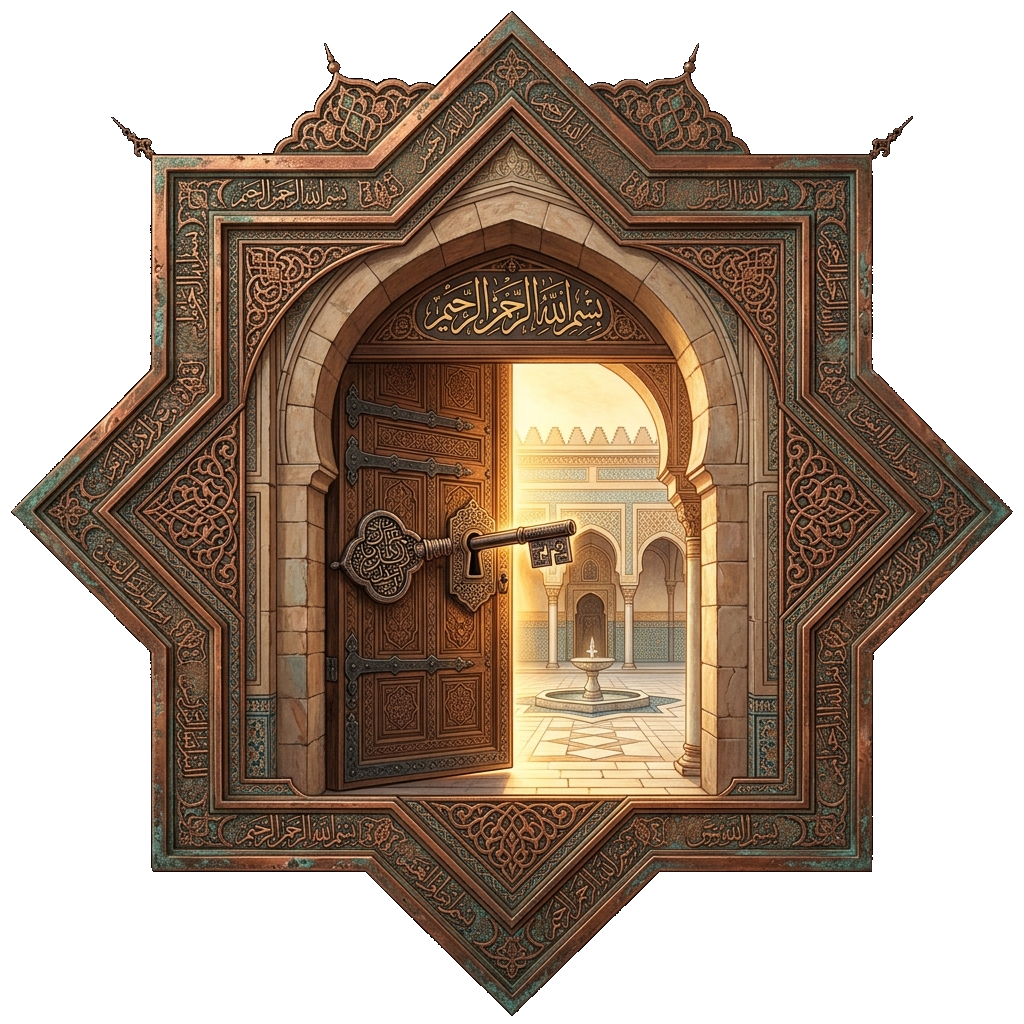
Beginning with the Basmalah places responsibility—not power—at the centre of an action.
The Basmalah is more than an opening phrase. It reminds us that an action begins in the name of Allah, with a visible intention and within a direction for which we remain accountable. BA carries this beginning into knowledge, vocation, technology, making and service: What are we doing, why are we doing it, whom do we answer to, and who will carry the consequences? BA is therefore more than a letter, logo or domain suffix. It is the sign that opens the gates of SAHN-I BA with the same questions of intention and trust.
The Basmalah opens the direction; Being Adam recalls who carries it and with what responsibility.
Being Adam
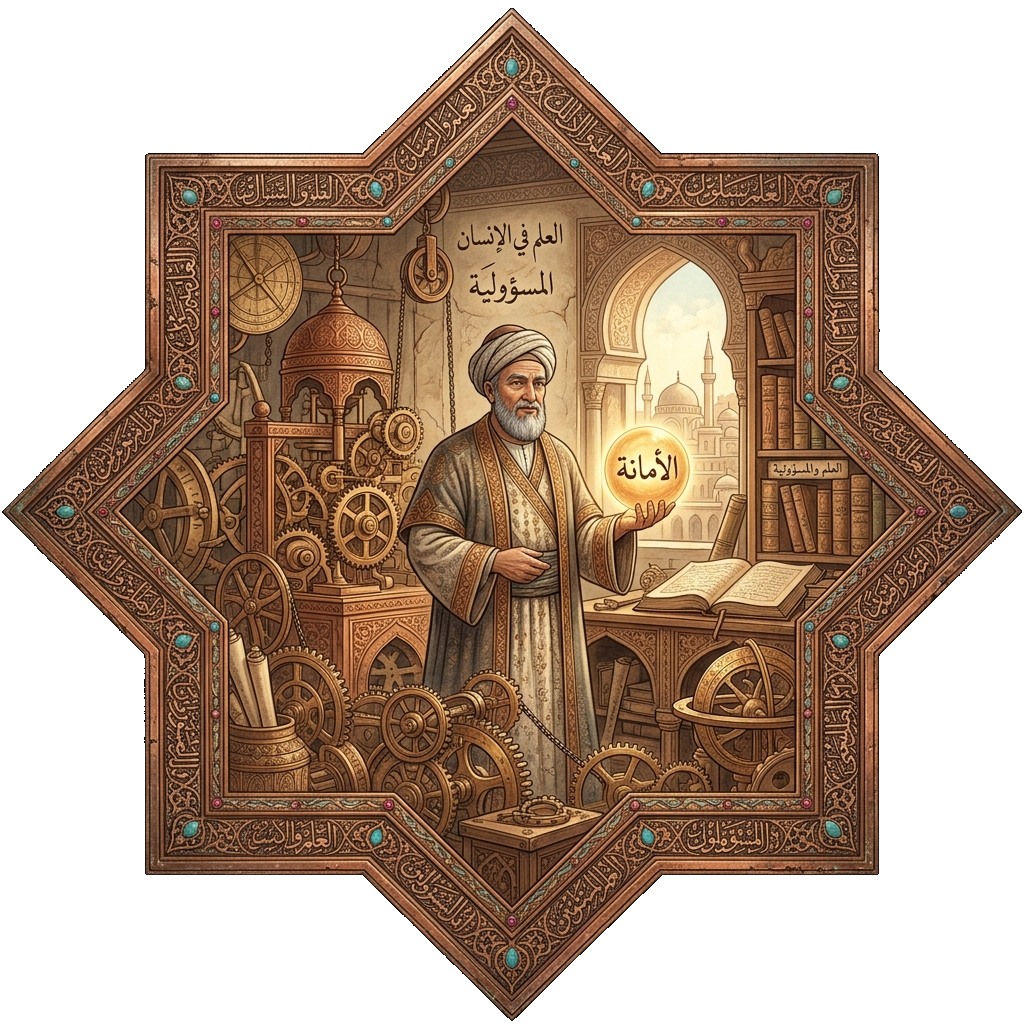
Being Adam does not grant human superiority; it names servanthood, choice and accountability.
A human being is created by Allah, addressed by revelation and entrusted with will and responsibility. Stewardship on earth is not unlimited ownership or permission to dispose of creation at will. It is the duty to carry knowledge, power, vocation and opportunity with justice, trust and accountability. Being Adam therefore does not make the human person a self-sufficient centre; it recognises a created and responsible addressee. Within RUYAH, this direction is grounded in the Qur’an and authentic Sunnah and approached through Sunni scholarly method and inherited learning.
Human worth is not shown by unlimited power, but by how a person carries trust.
Four clear questions
Before an action begins, BA asks us to see intention, the human person, the tool and the consequence together.
These four questions show how BA enters everyday decisions.
Intention and directionWhy are we doing this, what HAYR may it serve and whom is it meant to help? People and responsibilityWho makes the judgement, protects rights and trust, and carries the consequences? Knowledge and discernmentWhat do we know, what are we only estimating, and where must we learn again? Tools and technologyWhat limited task can a model, software system, dataset or machine support, and where must it not replace a person?
Limits of knowledge and intervention
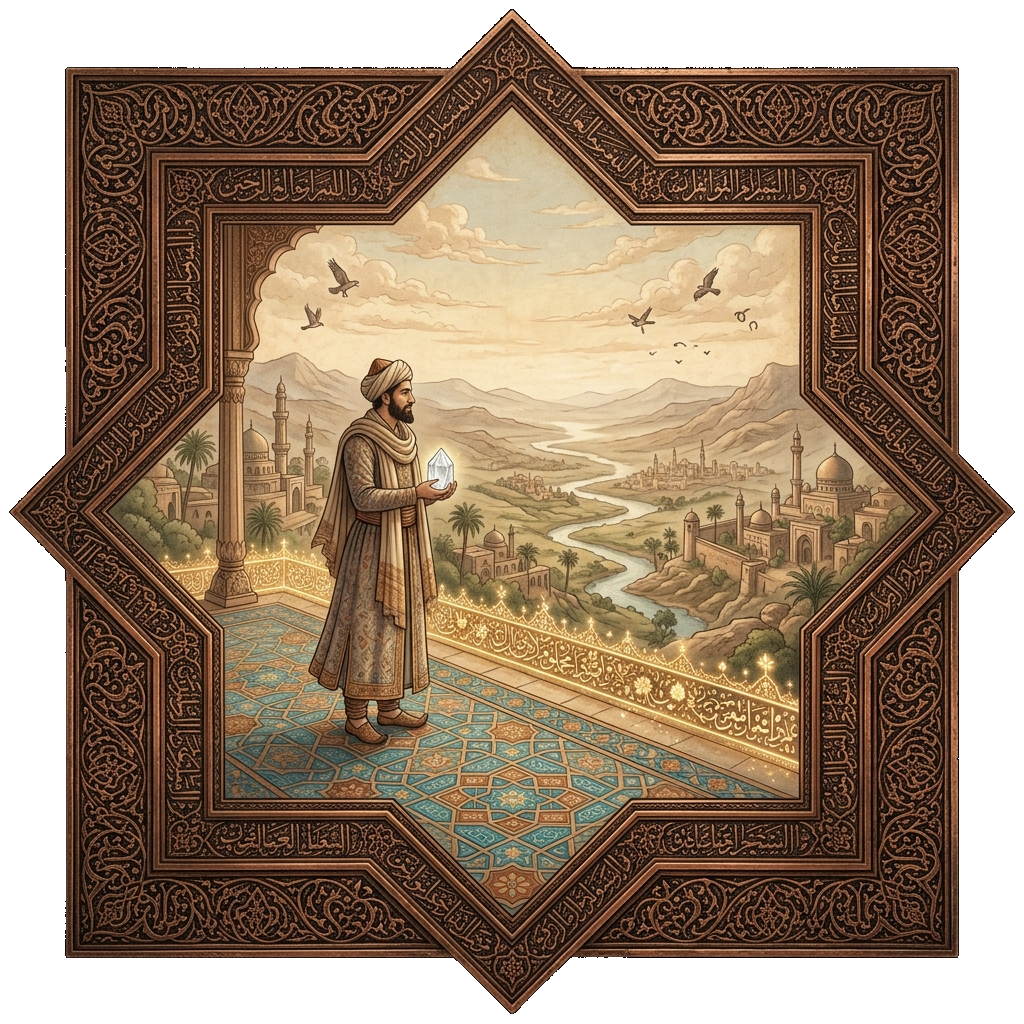
BA recalls direction; SIDRA the limit of a claim; MA that created life is greater than our tools.
People approach reality without dismissing what they observe and learn, yet they do not treat their observation, model or interpretation as the whole of truth. SIDRA asks how far the evidence reaches and where intervention must stop. MA reminds us not to reduce a person, body, family, living being, soil or water to data, resources or usefulness. BA binds this attention to servanthood and entrusted responsibility.
Do not deny what you have seen; do not claim knowledge of what you have not; know that created life is greater than your use of it.
SAHN and BA
SAHN is a courtyard for encounter and work; BA recalls the direction and responsibility with which we enter it.
A home, classroom, workshop, vocational circle, field setting or digital workspace can become a SAHN where people meet around knowledge, work and service. BA keeps the intention and understanding of the human person visible within that encounter. SAHN-I BA names the shared order of these courtyards; SAHN.BA is their digital portal.
SAHN opens the place of encounter; BA makes visible the direction and account we carry within it.
From thought into life
An idea opened through BA does not remain a statement; it moves toward learning, testing, making and service.
A matter begins by listening to people and real life. Different forms of knowledge and vocational experience meet; a small test is made, the result is observed and errors are corrected. Sound work is developed, maintained and opened toward HAYR. Circle, KARDESH, SAFAR, Labs, Build, Valley and WAQF are different working gates along this path; none replaces the intention and human responsibility present at the beginning.

People and tools
People understand, discern and answer for their judgements; models and machines assist with limited tasks.
BA Intelligence names the human capacities for understanding, will, conscience, FURQAN, RUSHD, judgement and trust. BA Internet is the field in which we work with data, models, software, media, automation, devices and machines. Models can find patterns, software can organise a process and machines can perform powerful tasks. Human beings remain responsible for purpose, legitimacy, acceptable consequences and the decision to stop. BA brings these two fields together without confusing them.
A tool carries capacity; a person carries intention, judgement and responsibility.
Concepts working together
The direction opened through BA takes practical form alongside other RUYAH concepts.
These concepts are not a single chain of control. They help us see intention, knowledge, conduct, protection and consequence together in different questions.
ADAB AND EDEB
Seek sound measure and live it in speech, relationships, work and judgement.
FURQAN AND RUSHD
Develop discernment between right and wrong and the maturity to carry responsibility for judgement.
SIDRA AND MA
Recall the limit of a claim and that created life is greater than data and models.
SEDD AND IHSAN
Protect against real risk and complete sound work so that it remains clear, beautiful and cared for.
KARDESH AND SAHN
Carry vocation, fraternity, learning and shared making into living relationships.
HAYR, WAQF AND UMRAN
Open beneficial work to service, shared use, long-term care and a living common order.
From BA into life
See how the direction opened through BA becomes a courtyard and a field of making.
Continue to SAHN to see where people meet, or to BAI to see how they can contribute to knowledge and technology while keeping human responsibility in view.
Deeper reading
Continue in the Külliyat Library
The portal summary offers direction; the Külliyat record keeps the source, context, and path to longer reading visible.
Atlas
RUYAH Concept Atlas
A concept atlas showing the relations among ADAB, EDEB, TE'DIB, SIDRA, MA, SEDD, İHSAN, SAHN, TEMSİL, MİLLET, and WAQF.
Open the Külliyat recordBook
RUYAH, SAHN.BA and SEMANIYYA Külliyat
A preparation record for a proposed Külliyat that would bring together sources related to RUYAH concepts and the portal architecture.
Open the Külliyat recordReport
BAI Human Oversight Report
A preparation record for a proposed report on human decision, contestability, reversal, representation, and responsibility in the use of models and automation.
Open the Külliyat record