


RUYAH > TEHÂFÜT
TehâfütTehâfüt
We do not accept a system of knowledge as the whole truth simply because it is widespread, technically powerful or backed by an institution. We ask what the evidence supports, where a model applies, which assumptions remain hidden and where a claim goes beyond its proof. Tehâfüt does not stop at criticism; it opens the way to better questions, models, institutions and useful work.

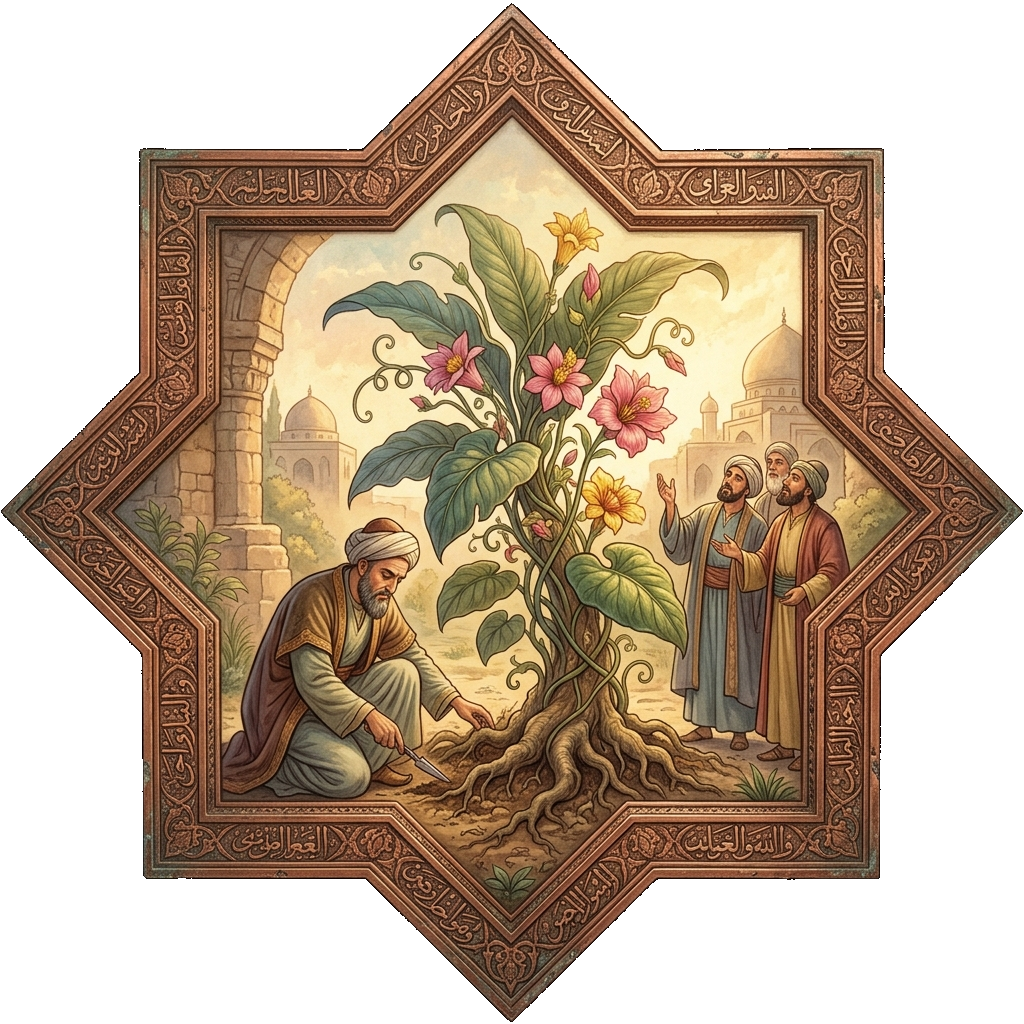
What Tehâfüt does
Tehâfüt does not begin by rejecting a powerful body of knowledge. It asks what the evidence proves, where it applies and where the claim goes too far.
A calculation may be correct, a model may work well and an institution may present strong evidence. Tehâfüt keeps that value within its proven scope. It then identifies the leap from measurement to the whole of reality, from a model to human nature, from technical possibility to moral permission, or from a provisional theory to an unavoidable truth. The aim is not endless doubt. It is to protect human judgement and responsibility, and to make better alternatives possible.
Tehâfüt challenges false necessity and clears room for better questions, better judgement and better work.
No claim is above review
Power, fame, technical complexity and institutional prestige do not place any claim beyond examination.
Sources, methods, assumptions, data choices, uncertainty, authority, conflicts of interest, serious counterarguments and routes for correction should remain visible. We ask the same openness of our own texts, models, programmes and institutions. No human work produced in the name of RUYAH becomes revelation; qualified review, questions and correction remain open.
Tehâfüt is not a tool used only against others. It is a discipline of knowledge that also makes our own claims answerable.
Eight questions
Before accepting or rejecting a claim, we examine it through eight questions.
The same questions can be used for a scientific theory, a technological promise, a model output, an economic scenario, a historical account, an educational method or an institutional decision.
01 What is actually being claimed?
Separate the claim itself from conclusions added by the media, commentators or ourselves. Write it in one clear sentence.
02 What kind of claim is it?
Distinguish direct observation, reported evidence, measurement, statistics, model, theory, scenario, wider interpretation and metaphysical judgement.
03 What evidence supports it?
Check the source, how the data was produced, the measuring conditions, the method, the form of proof and the relevant expertise.
04 What assumptions does it carry?
Bring unstated ideas about the human being, reality, progress, nature, the economy or the future into view.
05 What has been left out?
Look for unmeasured life, unselected data, unheard testimony, alternative models and facts removed from their context.
06 Where does it apply—and where does it stop?
A result that works under defined conditions should not automatically be extended to other fields, every person or the whole of reality.
07 Who gains power, benefit and risk?
Ask what decisions the claim enables, who is allowed to act, and how benefit, harm and accountability are distributed.
08 How can it be challenged and corrected?
Keep counterevidence, repeated measurement, alternative models, time limits, stopping rules, correction and withdrawal available.

Claims of technological inevitability
Technical capacity does not make one future inevitable. Speed, scale and automation are not enough to define progress.
A system may perform a task faster. That does not prove that people have become unnecessary, that every profession must change in one direction, or that society must deploy the system. Technical forecasts, economic scenarios, marketing stories and claims about human nature do not have the same status. RUYAH learns what new tools can do while also asking about their purpose, ownership, image of the human being and real consequences.
The future is not a technical script already written for us. It is shaped by human judgement, responsibility, institutions and choices about what we build.

Two directions of overreach
We set a boundary both when measurement is stretched into metaphysics and when a prior metaphysical view is presented as an observed result.
In one direction, a dataset is mistaken for the person, a model for reality, technical success for moral permission, or a machine output for human judgement. In the other, a prior belief is presented as measurement, a symbol as experimental evidence, a private experience as a shared scientific result, or a tafsir as though it were a provisional physical model. Tehâfüt examines both movements. SIDRA names the limit of human knowledge, MA keeps created beings larger than our models, and SEDD protects these boundaries in practice.
When levels of knowledge are confused, the result is not only error. Attention, time, capital and institutions can all be directed toward the wrong end.
False oppositions
Tehâfüt is not a reverse dogmatism that rejects reason, science or technology.
It does not silence a claim. It asks what the claim can legitimately support, preserves sound knowledge, limits overreach and opens new paths for research and useful work.
It is not a rejection of science. It is not the cancellation of reason. It is not hostility to technology. It is not denial without evidence. It is not a language of conspiracy or hidden-intention claims. It does not make every historical form absolute. It is not a method for targeting people. It does not stop at criticism and abandon useful work.
Levels of knowledge
Every move from the created world to a metaphysical judgement needs its own evidence and responsibility.
Distinguishing these levels does not diminish knowledge. It shows how much each statement can honestly carry.
01 The created world
Created reality is always greater than human measurement, language, models and purposes of use.
02 Direct observation and testimony
Our first encounter through sound senses, the body, direct experience and the testimony of living people.
03 Measurement
A qualitative or quantitative record made with defined instruments, scales, conditions and margins of error.
04 Data
A selected, classified, contextualised and processable representation of measurement.
05 Model
A computational representation that produces relationships, probabilities or outputs for a defined purpose, using chosen data and assumptions.
06 Theory
A scientific explanation connecting observations and models that remains open to testing and change.
07 Ontological interpretation
A wider human interpretation of what a model or theory may imply about reality and what kinds of beings exist.
08 Metaphysical judgement
A judgement about the source, meaning, purpose and ultimate order of reality. It does not follow automatically from a technical result.
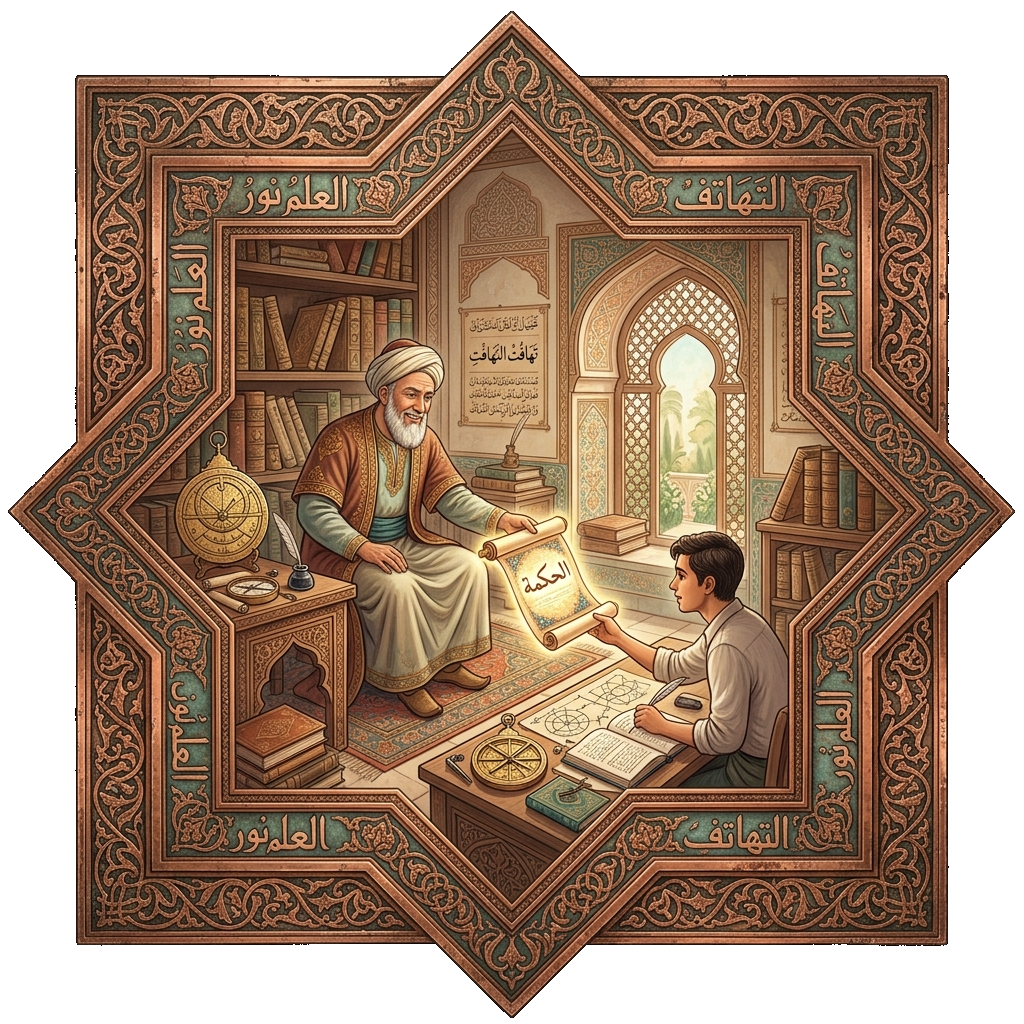
A historical line of inquiry
Al-Ghazali tests claims of necessity; Ali Qushji keeps astronomy from being tied to one philosophy of nature; Sahn-i Seman carries learning into institutions and civic purpose.
This is not a call to reproduce historical forms. Al-Ghazali’s Tehâfüt shows the courage to test claims of proof and necessity made by powerful philosophical systems. Ali Qushji’s methodological move keeps mathematical and astronomical calculation from becoming captive to a single metaphysics. Mehmed II’s Sahn-i Seman vision brings learning, competence, institutions, the city and useful work into one shared order. RUYAH brings that constructive courage to today’s data, models, machines and knowledge networks.
Intellectual independence remains answerable to revelation and truth while refusing submission to dominant assumptions, imported problem choices and claims of technological inevitability.
Questions for today
We examine the age’s major claims through their evidence, scope, image of the human being and real consequences—not through a culture of reaction.
Specialist knowledge and method matter in every field. No field may turn its own representation into the final definition of the human being, reality or the future.
Generative models and machines
Learn what systems commonly called “artificial intelligence” can calculate and produce, while examining claims about intelligence, consciousness, will and judgement separately.
Data and human profiles
Distinguish a record from the person, correlation from cause, a score from competence and prediction from judgement. Keep lived reality and the right to object in view.
Science and cosmology
Do not present direct observation, indirect measurement, mathematical models, inferences about the past and metaphysical interpretation at one level of certainty.
Work, the economy and the future
Treat automation, productivity, changes in work and resource scenarios as technical and economic claims. Separate them from claims that people are unnecessary or only one future is possible.
Biological and digital systems
When systems are justified by health, security or convenience, make authority, consent, exit, privacy and the risk of new forms of stratification visible.
Media, platforms and policy
Distinguish scientific findings, institutional statements, commercial interests, future scenarios and fear-driven stories. Record sources and serious counterviews.
From critique to building
Tehâfüt challenges false necessity; RUYAH, BAI and SAHN-I BA help people build better knowledge, models, tools and institutions together.
Critique matters when it opens better questions, learning, testing, useful work, maintenance and service instead of leaving people passive.
RUYAH and ADAB
They help us place people, knowledge, models, machines and what we build within a clear purpose and honest limits.
Return to RUYAHBA Intelligence
It develops perception, discernment (FURKAN), will, sound judgement (RÜŞD) and responsibility (AMANAH) without reducing intelligence to computation.
Explore BAIBA Internet
It helps people build data, models, software, automation, media and machines with visible sources, purposes, human decisions and routes for correction.
Enter BA InternetSIDRA, MA and SEDD
They name the limit of knowledge, keep created beings greater than our models and protect necessary boundaries in practice.
See the limitsSEFER, Valley and Labs
They bring people close to the real issue, test assumptions under limited conditions and correct judgement through real consequences.
Enter the fieldMission, Build and WAQF
They turn a verified need into a capable team, a working response, continued care and a shared responsibility opened toward HAYR.
Move to buildingFrom Tehâfüt to Tajdid
Name the kind of claim. Keep what is sound. Challenge what goes beyond its evidence. Build a better response through observation, competence and responsible work.
Tehâfüt does not freeze thought. Constants keep the direction clear; Tajdid works out a new response; Labs and Build test and make it; HAYR, WAQF and UMRAN show the kind of life that response should serve.
Deeper reading
Continue in the Külliyat Library
The portal summary offers direction; the Külliyat record keeps the source, context, and path to longer reading visible.
Atlas
RUYAH Concept Atlas
A concept atlas showing the relations among ADAB, EDEB, TE'DIB, SIDRA, MA, SEDD, İHSAN, SAHN, TEMSİL, MİLLET, and WAQF.
Open the Külliyat recordBook
RUYAH, SAHN.BA and SEMANIYYA Külliyat
A preparation record for a proposed Külliyat that would bring together sources related to RUYAH concepts and the portal architecture.
Open the Külliyat recordReport
BAI Human Oversight Report
A preparation record for a proposed report on human decision, contestability, reversal, representation, and responsibility in the use of models and automation.
Open the Külliyat record